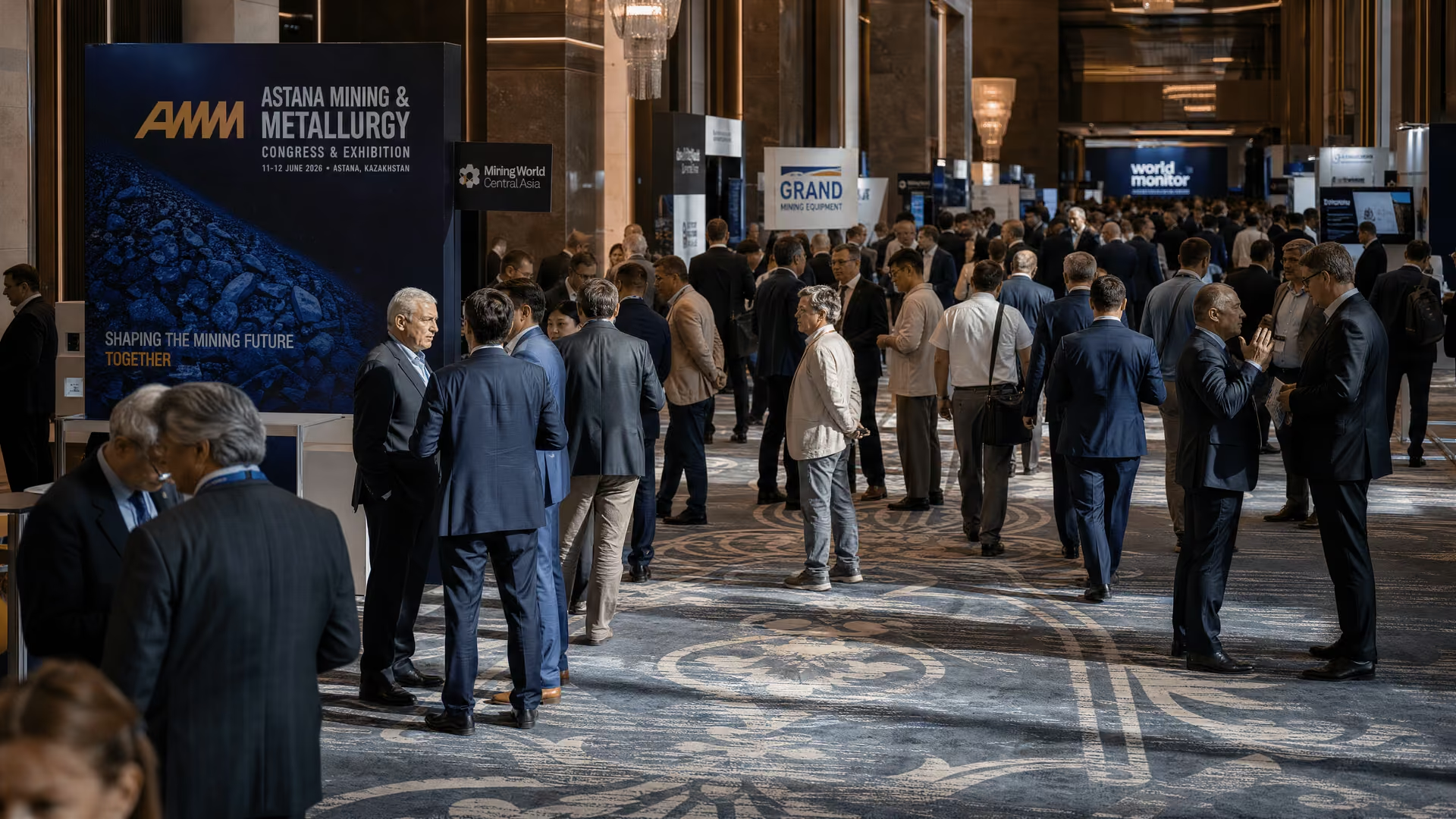


The Astana Mining & Metallurgy Congress and Exhibition 2026 brought 2,269 professionals from 29 countries to Hilton Astana for discussions on critical

The Astana Mining & Metallurgy Congress and Exhibition 2026 drew 2,269 professionals to Hilton Astana on June 11–12, putting Kazakhstan’s critical minerals, mining technologies and metallurgical supply chains at the centre of a two-day international industry gathering. The Times of Central Asia report on AMM 2026 describes the congress as a platform connecting government bodies, investors, mining and metals companies, technology suppliers and industry experts around Kazakhstan’s expanding role in the global minerals economy.
AMM 2026 positions Astana as a minerals-sector meeting point
The 16th International Astana Mining & Metallurgy Congress took place as both a conference and exhibition, combining strategic discussion with direct contact among companies, public authorities and technology providers. Its stated purpose was to connect Kazakhstan’s resource sector with wider global supply chains rather than to focus narrowly on one commodity or one stage of production.
That breadth is reflected in the agenda. Critical minerals, copper and other strategic resources appeared alongside international metals markets, investment and regulation, taxation, artificial intelligence in extraction and processing, sustainable mining, coal, gold and industrial safety. The programme therefore covered the commercial, technical and regulatory questions that determine whether mineral resources can move into more developed processing and manufacturing chains.
The event’s principal details can be summarised as follows:
| Event element | Reported detail | Source |
|---|---|---|
| Dates | June 11–12, 2026 | Astana Mining & Metallurgy Congress and Exhibition 2026 |
| Venue | Hilton Astana | Astana Mining & Metallurgy Congress and Exhibition 2026 |
| Participants | Government bodies, investors, mining and metals companies, technology suppliers and industry experts | Astana Mining & Metallurgy Congress and Exhibition 2026 |
| 2026 scale | 2,269 professionals, more than 120 speakers, 390 B2B and B2G meetings, and 75 exhibiting companies from 16 countries | AMM 2026 brought together more than 2,200 industry professionals |
The scale reported after the congress gives the exhibition component commercial significance, while the presence of government and international investors placed the event within a broader policy and investment discussion. The available reporting does not identify individual contracts concluded at the event, but it does record a large number of business-to-business and business-to-government meetings.
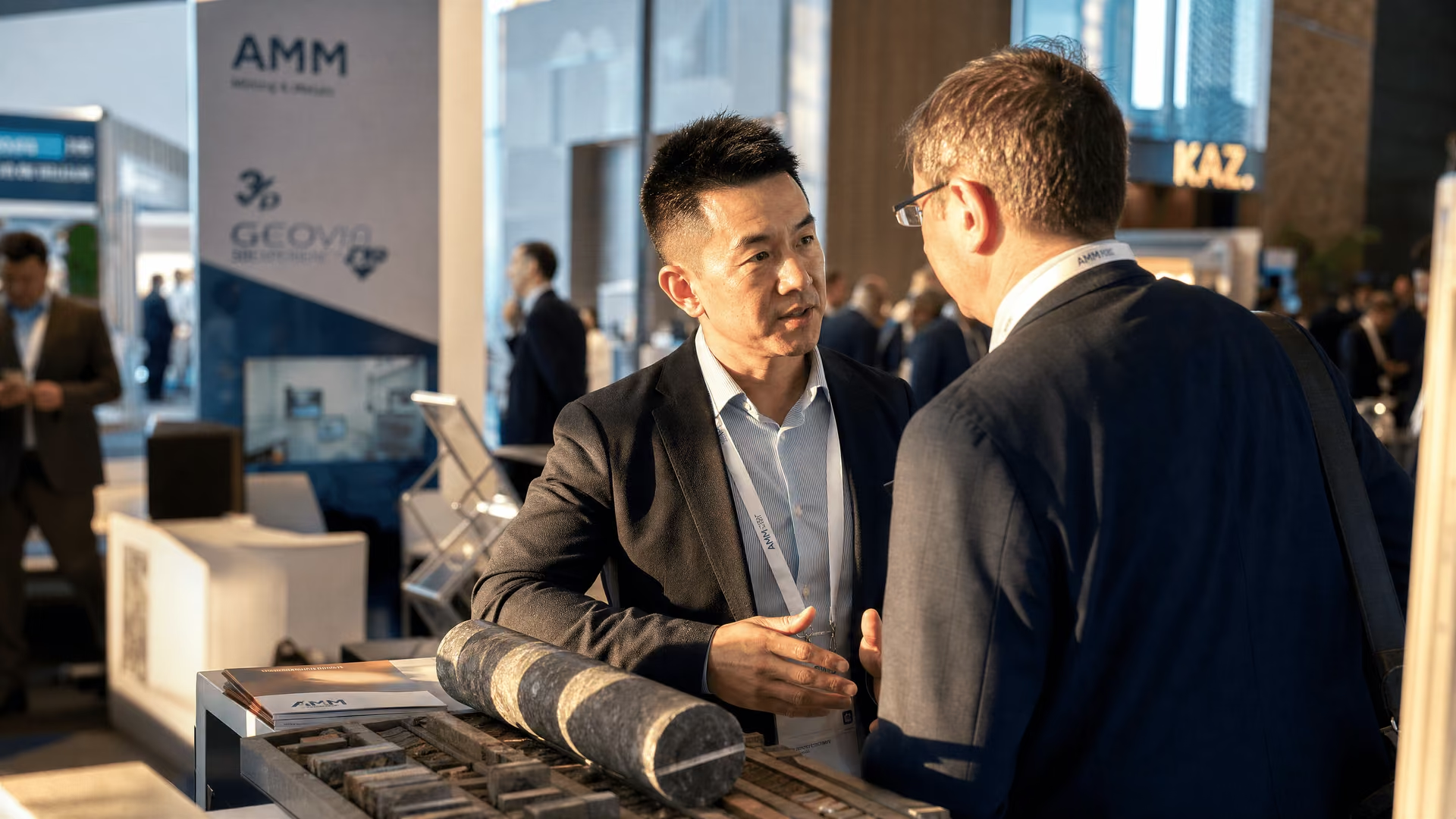
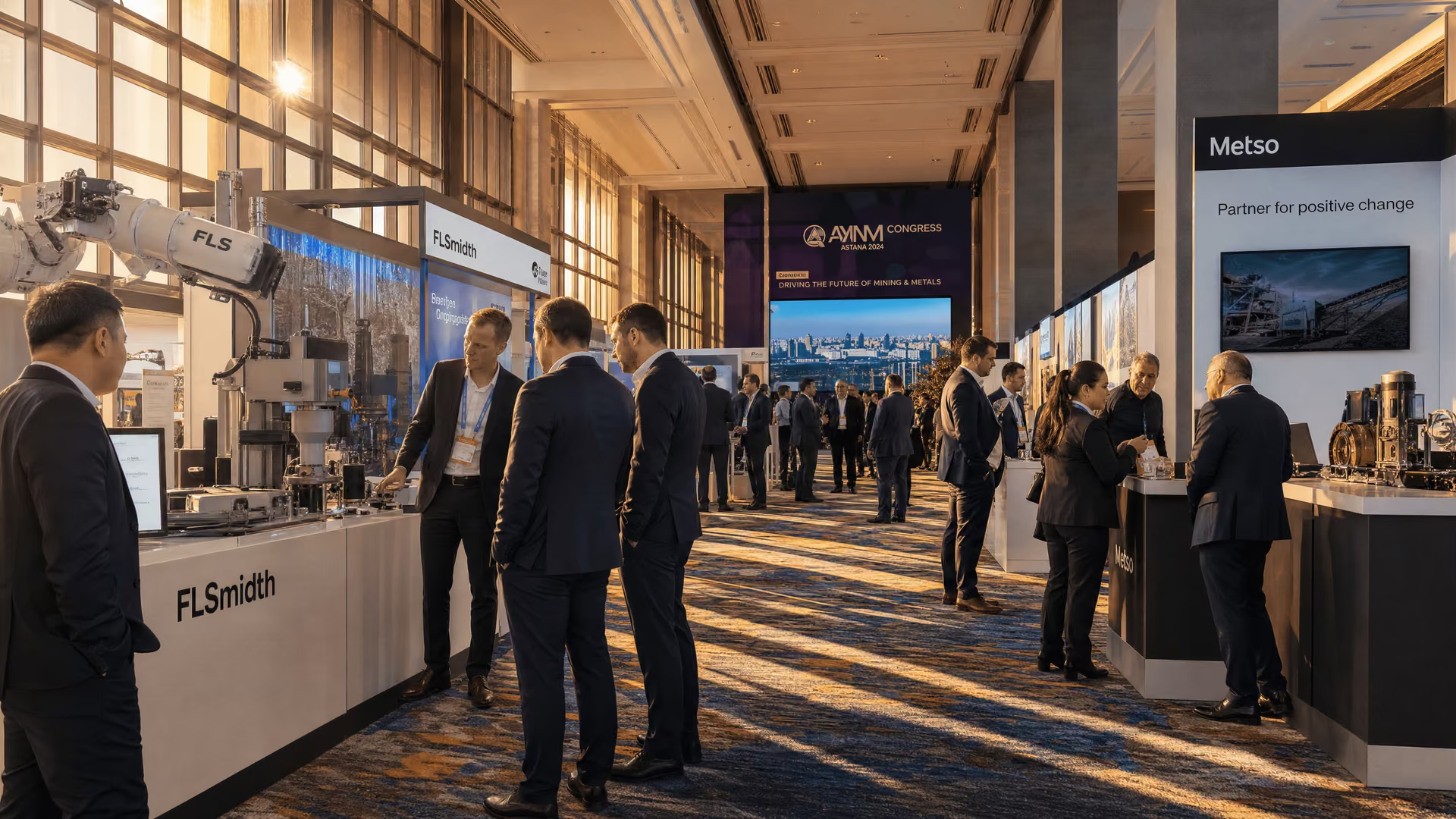
The setting and format of the event can be represented by a congress hall combining delegates with mining and metallurgy exhibition stands:
Kazakhstan’s mineral base anchors the congress agenda
AMM 2026 was framed around the growing importance of Central Asia to the global minerals economy. Kazakhstan’s resource profile explains why the country can convene discussions that extend from mining investment to metallurgy, downstream processing and industrial supply chains.
The mineral figures cited in the congress coverage are substantial, although they describe different parts of the resource system. Kazakhstan produced 25,839 tonnes of uranium in 2025, equivalent to about 40% of global output, and holds about 14% of global uranium resources. The country is also identified as one of the world’s important chromite producers and reserve holders, with the U.S. Geological Survey estimating 2025 chromite mine production at 7 million tons and ore reserves at 230 million tons.
Zinc adds another direct connection to industrial metals supply. The U.S. Geological Survey estimated Kazakhstan’s 2025 zinc mine production at 360,000 tons, with reserves of 7.4 million tons. Zinc is widely used in galvanised steel for construction, automotive and industrial applications, while chromium is essential to stainless steel and superalloys.
The remaining resources highlighted in the report broaden the strategic-minerals case. Kazakhstan’s estimated 2025 tungsten mine production was 2,400 tons following the start of production at the Boguty deposit. The government has also estimated resources of more than 20 million metric tons at the Zhana Kazakhstan rare-earth deposit, which contains neodymium, cerium, lanthanum and yttrium.
For the congress, these commodities are not interchangeable. They point to distinct supply-chain questions:
- Uranium connects Kazakhstan to global nuclear-energy markets and gives the country an important position in a strategic energy material.
- Chromite connects mining output directly with stainless-steel and superalloy production.
- Zinc links the country’s mining sector with galvanised steel and other manufacturing applications.
- Tungsten supports discussions on cemented carbides, specialty steels, electronics and defence-related manufacturing.
- Rare earths create a potential route into supply chains for advanced electronics, clean-energy technologies and defence industries.
The steel connection runs through alloying and processing
AMM 2026 was not a conference centred on finished steel grades, specification equivalence or steelmaking standards. Its relevance to steel-industry readers lies further upstream, in the materials and processing systems that support steel and associated manufacturing chains.
Chromium, zinc and tungsten in the industrial chain
Chromium is the clearest bridge between Kazakhstan’s mining base and the steel sector. Its use in stainless steel and superalloys means that chromite supply has implications beyond mining itself, extending into alloy production and the manufacturing industries that depend on corrosion resistance, heat resistance or other specialised performance characteristics. The reported reserve and production figures are therefore relevant to companies assessing upstream availability, processing capacity and supply-chain concentration.
Zinc has a different role. It is widely used to protect steel products through galvanising, making zinc supply relevant to construction, automotive and industrial demand. The congress agenda’s combination of mining, metallurgy, investment and international metals markets allows those links to be discussed within one forum rather than as isolated commodity issues.
Tungsten is associated with smaller production volumes but specialised uses. The report identifies its hardness, density and heat resistance as important for cemented carbides, specialty steels, electronics and defence-related manufacturing. That combination makes processing technology and market access as important as mine output when considering the material’s industrial significance.
The rare-earth discussion sits further from conventional steel procurement but remains part of the same strategic-minerals conversation. The reported Zhana Kazakhstan resource contains neodymium, cerium, lanthanum and yttrium, elements associated in the source material with advanced electronics, clean-energy technologies and defence industries. Their inclusion shows that AMM 2026 treated the mining and metallurgical complex as a broad industrial platform, not simply as a producer of bulk ores.
An editorial view of the exhibition’s upstream emphasis would show delegates examining technical displays and mineral-sector materials rather than finished consumer products:
Exhibition activity adds a commercial layer to the congress
The exhibition gave the congress a practical counterpart to its policy and market agenda. Seventy-five companies from 16 countries exhibited, while the event recorded 390 B2B and B2G meetings. Those figures indicate a format designed to bring project, technology and public-sector conversations into the same venue.
The participant mix was deliberately broad. Government bodies brought the investment, regulatory and taxation dimensions of Kazakhstan’s mining policy. International investors represented potential capital and market access. Mining and metals companies brought operating priorities, while technology suppliers addressed extraction, processing and the use of artificial intelligence in those activities.
For procurement engineers and metals buyers, the commercial relevance is not limited to the presence of raw materials. It also concerns whether a producing country can connect resources with reliable processing, industrial technology, regulation and international customers. The congress agenda explicitly placed those subjects together, including sustainable mining and industrial safety alongside investment and artificial intelligence.
That structure also helps explain the distinction between a resource announcement and a supply-chain development. A deposit or production figure establishes geological or mining potential. The congress’s stated objective was broader: to translate sectoral momentum into investment, technology partnerships and deeper regional and international cooperation. The reported meetings are evidence of engagement, while the supplied facts do not establish the completion of specific projects.
The exhibition therefore functioned as a point of contact between upstream resources and the systems needed to extract, process and place those materials in international markets. That is particularly relevant for strategic minerals whose commercial value depends on more than mine output alone.
U.S. engagement shifts the discussion toward projects
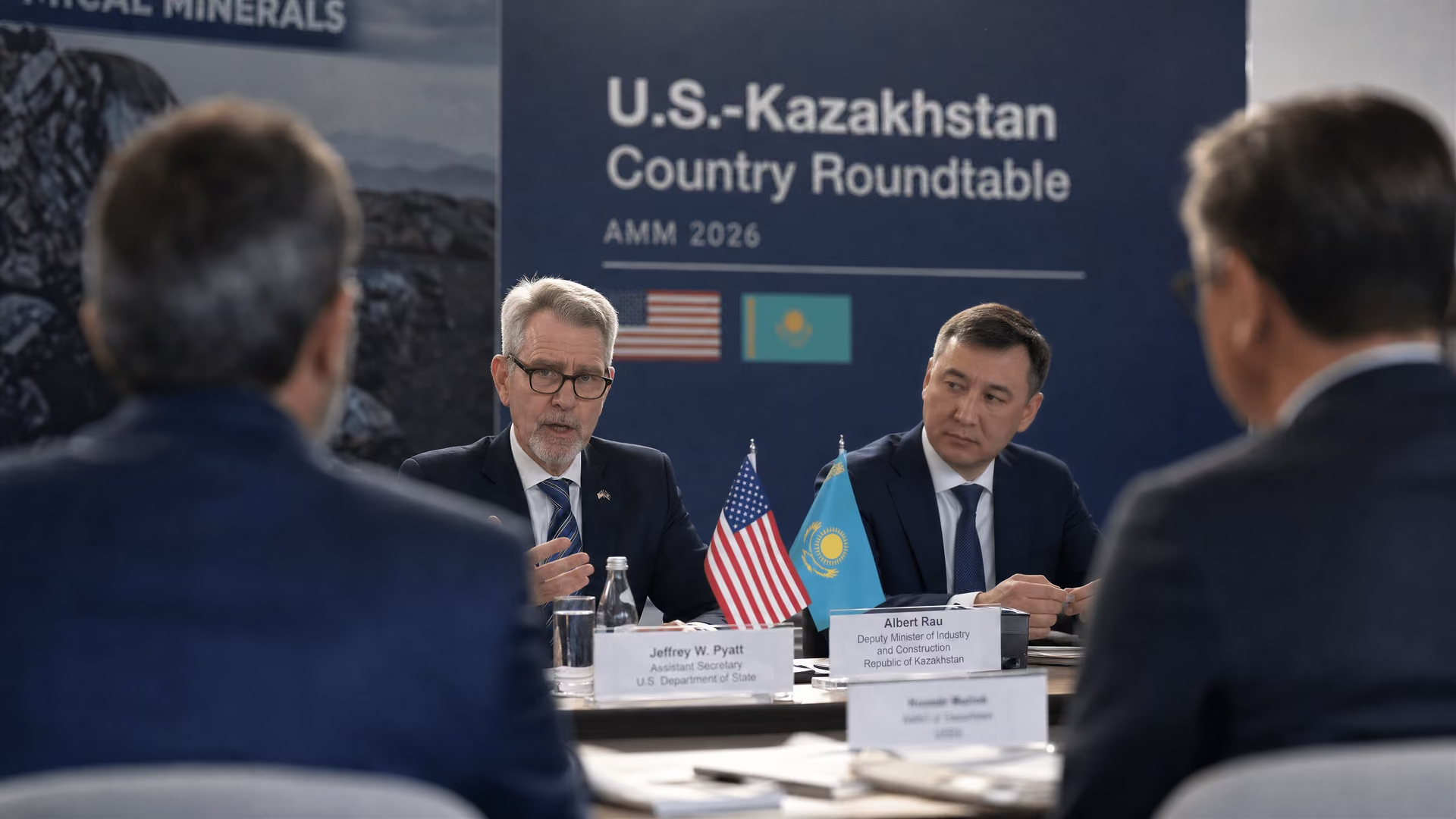
The congress also hosted a series of reported interventions focused on converting international interest into practical cooperation. U.S. officials, American companies and Kazakhstan’s representatives discussed critical minerals in a country roundtable, while investors and industry analysts addressed processing, metallurgy and Kazakhstan’s position among global mining jurisdictions.
Ambassador Yerzhan Kazykhan, Kazakhstan’s presidential representative for negotiations with the United States, called for bilateral ties to be turned into practical critical-minerals projects during the June 11 U.S.–Kazakhstan Country Roundtable. David L. Fogel, Assistant Secretary of Commerce and Director General of the United States and Foreign Commercial Service, told delegates on June 11–12 that the United States was moving from discussion toward strategic execution in Central Asia’s critical-minerals sector.
Nicole Rodgers, president of the U.S.-based Alliance for Mineral Security, said U.S. investors were showing growing interest in Kazakhstan’s critical-minerals sector. The focus, according to the supplied reporting, was extending beyond extraction to processing, metallurgy and wider supply-chain development. That emphasis closely matches AMM 2026’s stated purpose and the importance of chromium, zinc, tungsten and rare earths in downstream industrial applications.
The sequence of reported developments around the congress was as follows:
What the event leaves for metals and mining stakeholders
The significance of AMM 2026 rests on the way it brought several normally separate discussions together. Kazakhstan’s production and reserve figures provide the resource base; the agenda supplied the policy, technology and market context; and the exhibition and meeting programme created a forum for companies and public authorities to test possible connections.
For steel-industry readers, three aspects deserve particular attention:
- The role of chromium in linking Kazakhstan’s chromite sector with stainless steel and superalloy supply chains.
- The role of zinc in connecting mining output with galvanised steel used in construction, automotive and industrial applications.
- The emphasis on processing, metallurgy, technology and regulation rather than extraction alone, particularly in discussions involving U.S. investors and strategic-minerals partners.
The broader strategic question is whether Kazakhstan can use its mineral base to secure deeper participation in international supply chains. AMM 2026 was explicitly framed as a mechanism for pursuing that objective. The reported attendance, exhibition participation and meeting count show that the issue attracted substantial international engagement, while the comments from Kazakhstan, U.S. officials, investors and S&P Global Energy/Platts indicate that the discussion is moving toward project development and processing capacity.
That does not remove the practical questions surrounding any future development. Investment and regulation, taxation, sustainable mining, industrial safety and the deployment of artificial intelligence were all included in the agenda, suggesting that resource potential alone was not presented as sufficient. The event’s own scope acknowledged that competitive participation in global minerals markets depends on the full operating and policy environment.
AMM 2026 consequently matters less as a conventional exhibition of mining interests than as a measure of how Kazakhstan is presenting its mineral sector to international capital, technology suppliers and industrial customers. Its next test will be whether the dialogue and meetings reported around the June event develop into the investment, processing and supply-chain cooperation identified as its central objectives.
AMM 2026 showed Kazakhstan presenting its mining and metallurgical complex as a broader supply-chain proposition rather than a collection of isolated deposits. With critical minerals, processing, technology, investment and international cooperation on the same agenda, the Astana event gave steel and metals stakeholders a focused view of how the country is seeking a larger role in global mineral markets.
Sources
- EuroSteel 2026 (eurosteel2026.prz.edu.pl)
- International Stainless & Special Steel Conference 2026 (smr-events.com)
- Gulf Steel Expo 2026 (gulfsteelexpo.com)
- Green Steel Conference 2026 (greensteelworld.com)
- SteelOrbis Fall 2026 Conference & 95th IREPAS Meeting (event.steelorbis.com)
- 5th International conference on Ingot Casting, Rolling and Forging (submit.m-n.marketing)
- Stainless Steel World Asia (stainless-steel-world-asia.com)
- EuroBLECH 2026 (euroblech.com)
- The Future of Green Steel 2026 (wplgroup.com)
- 2nd European Steel Scrap and Circular Economy Forum 2026 (greensteelhub.com)