



A Nature Communications study reports a maraging steel with 3 GPa yield strength, 7.0% tensile elongation and 47.5% reduction in area, produced through

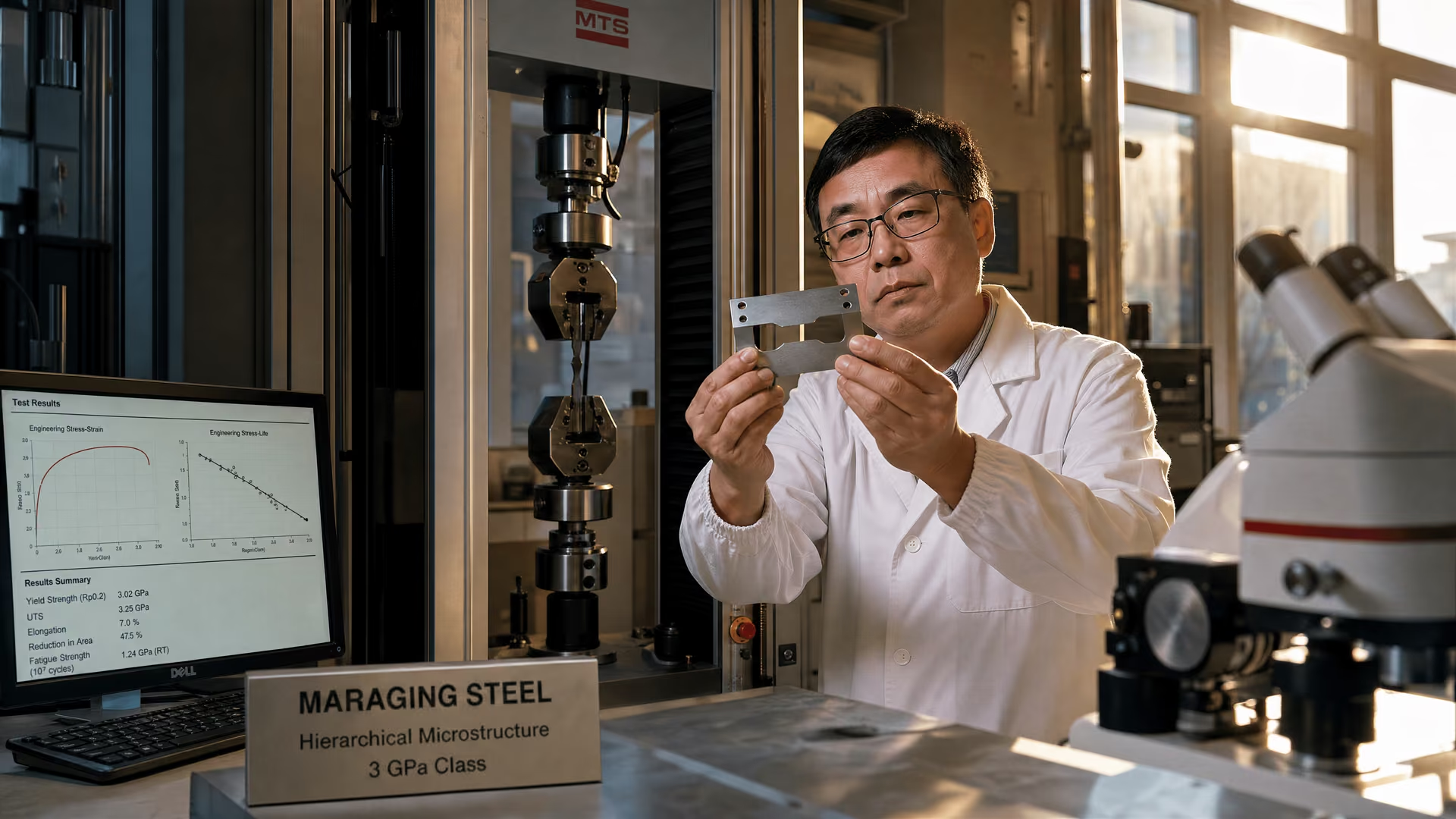
A Nature Communications study published on 18 June 2026 reports a maraging steel that reaches 3 GPa yield strength while retaining 7.0% tensile elongation and 47.5% reduction in area through a hierarchical microstructural architecture. The authors also report 1.24 GPa fatigue strength at ambient temperature, 2 GPa yield strength at 500 °C and production in industrially viable billets.
A 3 GPa target with damage tolerance
The study addresses a long-standing problem in ultrahigh-strength steel: increasing strength usually reduces the material’s ability to deform and resist fracture. The paper identifies yield strength as the critical design metric for components in which plastic deformation marks the boundary between safe operation and failure. High-strength alloys, particularly in aerospace applications, have reached approximately 2 GPa in yield strength, but the next target is 3 GPa for lighter and more efficient load-bearing systems.
The significance of the reported result is therefore not simply that the steel crosses a numerical strength threshold. It combines that strength with tensile elongation, reduction in area, fracture toughness and fatigue performance. The authors describe the combination as exceeding the performance of existing 3 GPa steels, while also reporting retention of strength at elevated temperature.
Why conventional strengthening loses ductility
The trade-off is visible across several established high-strength steel approaches discussed in the paper. In AerMet 100 and AerMet 360, the reported yield strength rises from 1724 to 2245 MPa as total elongation falls from 14% to 6.6%. The paper attributes the loss mainly to profuse semi-coherent carbides that concentrate stress and promote fracture.
Maraging steel presents a related limitation. The 18Ni(400) grade can reach up to 2.6 GPa yield strength, but its ductility is constrained to 6% because of the high volume fraction of brittle intermetallic strengthening phases. Work hardening can push maraging steel toward 3 GPa, but the paper reports that total elongation deteriorates further. Cold-drawn pearlitic steel wire shows the same general pattern: although its nanoscale layered pearlite structure raises strength, total elongation falls to 2.5% when ultimate tensile strength reaches 2.5 GPa.
A separate study of long-term strain ageing in Q690D structural steel provides a supporting example of the same strength–ductility tension: strength increased while ductility declined, and pre-strains above 1.7% lowered the ultimate-to-yield strength ratio below a cited design-code threshold, according to the study of long-term strain ageing in Q690D structural steel. The 3 GPa work takes a different route by treating the distribution of strengthening features as part of the damage-tolerance problem.
The benchmark values are useful, but they are not identical measurements. The table separates yield strength from ultimate tensile strength and total elongation from the more general ductility description used for 18Ni(400):
| Material or condition | Reported strength | Reported ductility | Source |
|---|---|---|---|
| AerMet 100 | 1724 MPa yield strength | 14% total elongation | Ductile and scalable 3 GPa steel via a hierarchical microstructural architecture |
| AerMet 360 | 2245 MPa yield strength | 6.6% total elongation | Ductile and scalable 3 GPa steel via a hierarchical microstructural architecture |
| 18Ni(400) maraging steel | Up to 2.6 GPa yield strength | 6% ductility | Ductile and scalable 3 GPa steel via a hierarchical microstructural architecture |
Three scales of the hierarchical architecture
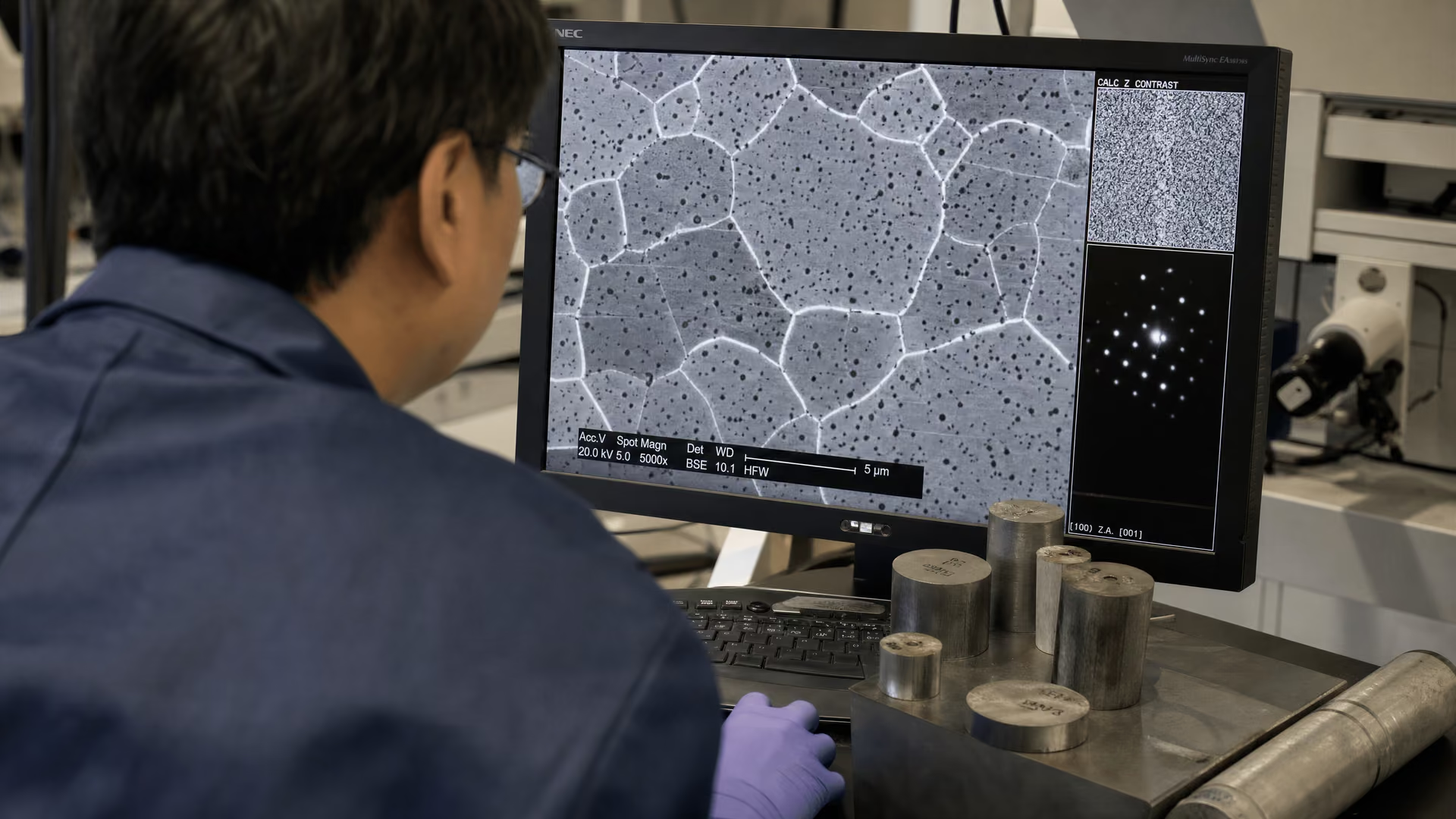
The proposed solution is a designed maraging steel with the composition Fe-16Ni-7Mo-1.6Ti-15Co-0.1Al, expressed in weight percent. Rather than relying on one strengthening mechanism, the study combines tailored precipitation with high-temperature severe plastic deformation. The resulting microstructure contains features operating together across different length scales.
The microstructural combination
The architecture reported by the authors consists of three principal elements working as a hierarchy:
- Multi-misfit nano co-precipitates, providing the nanoscale precipitation component of the designed maraging-steel structure.
- A high but spatially uniform density of dislocations, avoiding the strongly localised dislocation arrangements associated with premature damage.
- Ultrafine equiaxed grains, adding a fine-grained structural level to the precipitate and dislocation architecture.
The important point is the coordination of these features rather than the presence of any one feature in isolation. The paper reports that the hierarchical arrangement delocalises stress concentrations that commonly embrittle ultrahigh-strength materials. In fracture terms, the architecture changes the reported failure mode from brittle cleavage to ductile dimpling.
The hierarchical microstructure delocalises stress concentrations and converts brittle cleavage fracture to ductile dimpling.
Nature Communications study
The reported property profile extends beyond tensile strength
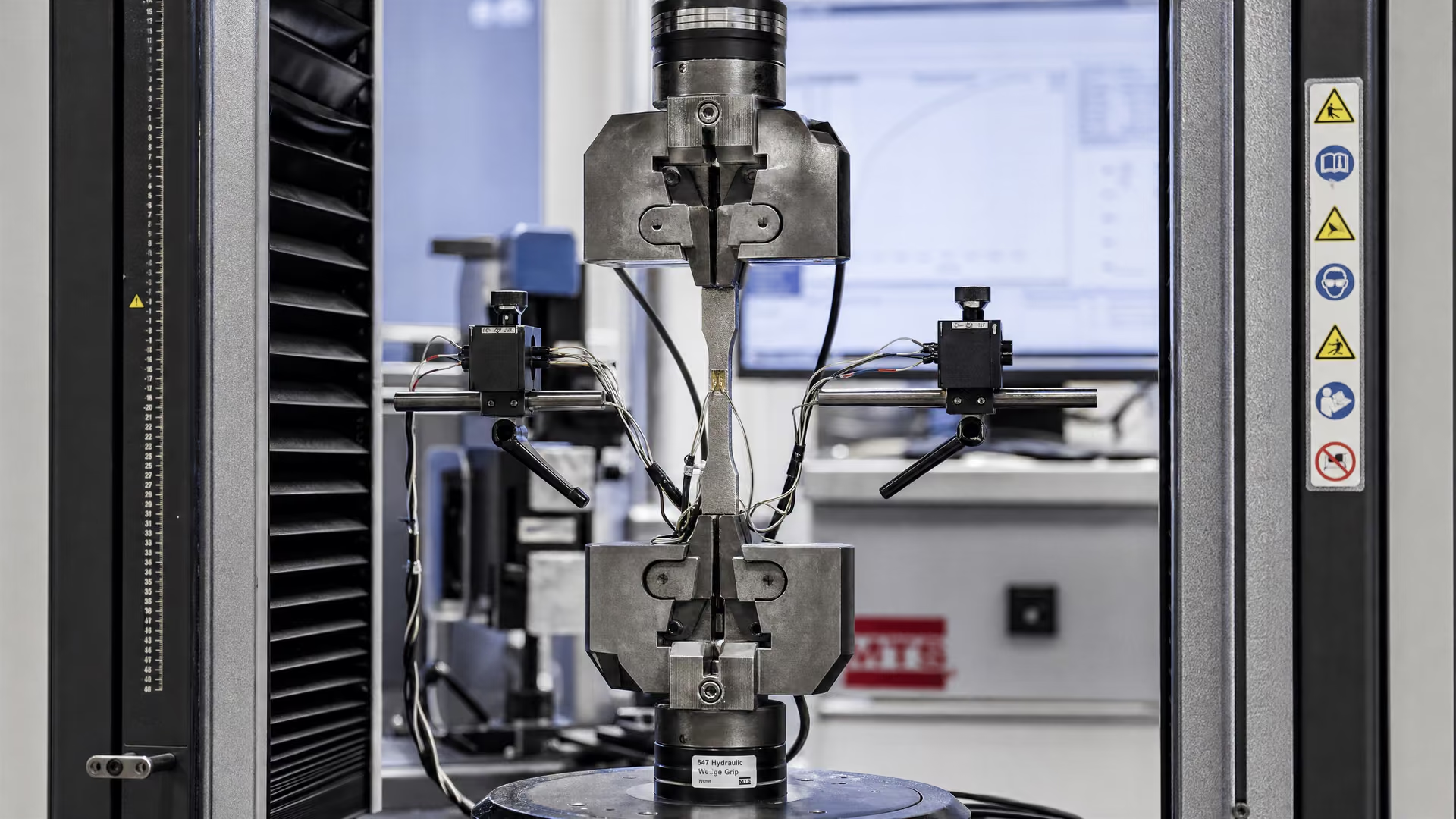
The performance claim rests on a group of reported measurements rather than on yield strength alone. At 3 GPa yield strength, the steel retains 7.0% tensile elongation and 47.5% reduction in area. The paper also reports a fracture toughness, KIc, of 26.0 ± 0.2 MPa·m1/2. These values place ductility and crack resistance alongside the strength result.
The reported operating envelope also includes cyclic and elevated-temperature performance. Fatigue strength is given as 1.24 GPa at ambient temperature, while yield strength is reported at 2 GPa at 500 °C. The combination is relevant to the paper’s stated objective of enabling damage-tolerant components for extreme environments, including potential next-generation applications such as transmission shafts for space exploration vehicles.
The principal quantitative results can be summarised as follows:
The distinction between these metrics matters for engineering interpretation. Yield strength describes the onset of plastic deformation, tensile elongation records deformation over the tensile test, reduction in area captures the extent of localised necking before fracture, and KIc addresses resistance to crack extension. The supplied study summary reports all four outcomes, but it does not provide standard designations for the test methods in the text available here.
Billet-scale processing is the practical test of scalability
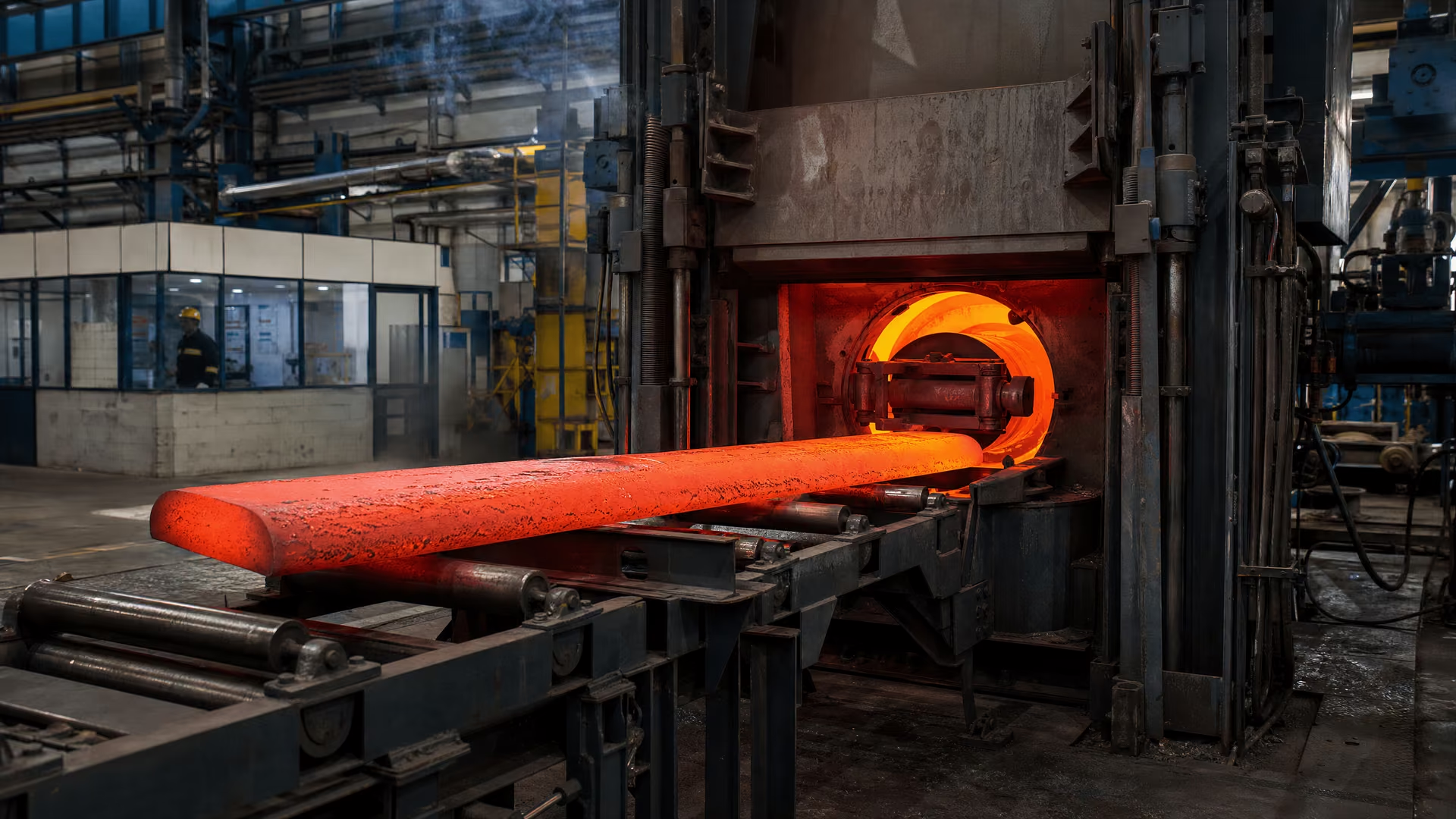
The word scalable in the study’s title is tied to the processing result as well as the material’s properties. The authors report that the performance was achieved in industrially viable billets, not only described as a laboratory microstructure. That claim connects the hierarchical design to a form of material that can be considered for component manufacture.
The reported route combines the designed Fe-16Ni-7Mo-1.6Ti-15Co-0.1Al maraging-steel chemistry, tailored precipitations and high-temperature severe plastic deformation. Because the desired behaviour depends on the simultaneous presence of nano co-precipitates, uniformly distributed dislocations and ultrafine equiaxed grains, the processing challenge is to reproduce the architecture throughout the billet rather than only in a small examined region.
The supplied article text does not state billet dimensions, production throughput or a commercial qualification schedule. It therefore supports a claim of industrially viable billet processing, but not a claim that the steel is already a standardised or commercially deployed product. For procurement and design teams, that distinction is material: the reported composition and property set identify a research alloy, not an EN, DIN, ASTM, GOST, JIS or GB grade designation.
A materials-development result rather than a new standard grade
For the steel industry, the study shifts attention from the search for a single stronger precipitate or a higher work-hardening level toward the architecture of the complete microstructure. Its central proposition is that ultrahigh strength and damage tolerance can be designed together when precipitates, dislocations and grains are spatially coordinated.
That does not remove the need for qualification. The reported values establish a demanding combination of mechanical properties for the designed maraging steel, including performance at ambient temperature and at 500 °C. They do not, in the supplied facts, establish a standards designation, component certification or production-market status.
Key questions about the reported 3 GPa steel
What composition does the study report?
The designed maraging steel is Fe-16Ni-7Mo-1.6Ti-15Co-0.1Al, with the composition expressed in weight percent.
What makes the microstructure hierarchical?
The reported structure combines multi-misfit nano co-precipitates, a high but spatially uniform density of dislocations and ultrafine equiaxed grains.
Which properties were reported at the 3 GPa strength level?
The study reports 3 GPa yield strength, 7.0% tensile elongation, 47.5% reduction in area and fracture toughness of 26.0 ± 0.2 MPa·m1/2.
Does the report establish a standard commercial grade?
The supplied article text identifies the alloy by composition and reports its performance in industrially viable billets, but it does not identify an EN, DIN, ASTM, GOST, JIS or GB grade designation.
The reported 3 GPa steel represents a microstructural-design approach to ultrahigh-strength metallurgy: strength is combined with ductility and fracture resistance by coordinating precipitates, dislocations and grains across a hierarchy. Its demonstration in industrially viable billets strengthens the scalability claim, while the absence of a stated standard designation or commercial qualification keeps the result within the field of advanced materials research rather than established grade equivalence.
Sources
- #FavoriteMoments: How We’re Making Mobility Safer (voestalpine.com)
- Patricia makes a difference: #FavoriteMoments for the environment and quality (voestalpine.com)
- High Strain Rate Testing of Advanced High-Strength Steels (ahssinsights.org)
- M-71 (ahssinsights.org)
- Scientists Use Fungal Chitin to Create Stronger Medical Hydrogels (azom.com)
- Introducing the Gatan F1-GIF System (azom.com)
- Glossary of technical terms for the use of metallurgical engineers Terms starting with alphabet ‘Z’ (ispatguru.com)
- Glossary of technical terms for the use of metallurgical engineers Terms starting with alphabet ‘Y’ (ispatguru.com)
- Beyond conventional compensation: Advanced power supply concept for AC electric arc furnaces (with ActiFeed PLUS) (greensteelworld.com)
- Outokumpu appoints new president of business area Europe (greensteelworld.com)