

LME copper reached USD 14,424.50 per tonne as immediate-delivery premiums widened and inventories fell. Aluminium is gaining attention for cable applications

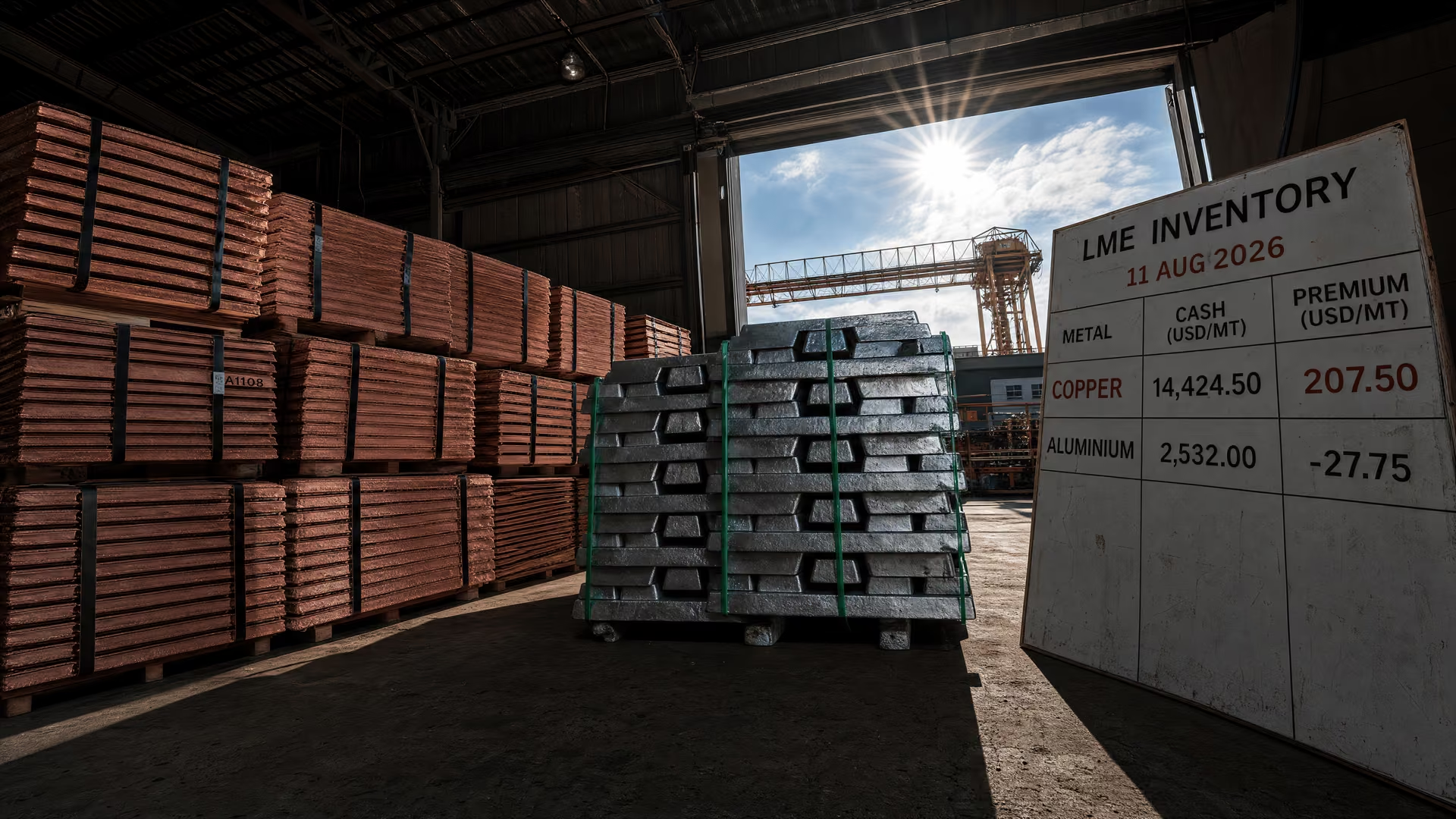
LME cash copper reached USD 14,424.50 per tonne on 11 August 2026, while the premium for immediate delivery widened to USD 207.50 per tonne and pushed aluminium further into consideration as a cable alternative, according to the Stainless Espresso market report.
Copper’s immediate-delivery premium signals a supply problem
The copper move is significant not only because of the headline price, but because of what is happening around physical availability. LME cash copper rose from USD 14,290 per tonne on the previous day to USD 14,424.50 per tonne on 11 August. At the same time, exchange inventories fell to 214,550 tonnes, compared with more than 244,000 tonnes on 3 August.
The sharper signal is the spread between metal available now and metal due in three months. Buyers paying for immediate delivery were paying USD 207.50 per tonne more than for three-month copper, up from a premium of USD 69 at the beginning of August. The source describes this kind of premium as a response to scarcity: the market is placing a higher value on material that can be delivered immediately than on material that will arrive later.
The Stainless Espresso report attributes the shortage, citing media reports, to a combination of too little ore concentrate, smelters operating with very limited margins and restricted volumes of copper available for immediate delivery. The new Congolese export ban is presented as having exposed or intensified those underlying conditions. The report expressly distinguishes the development from tariff speculation in Washington, describing it instead as a physical supply shortage.
The physical market behind the price
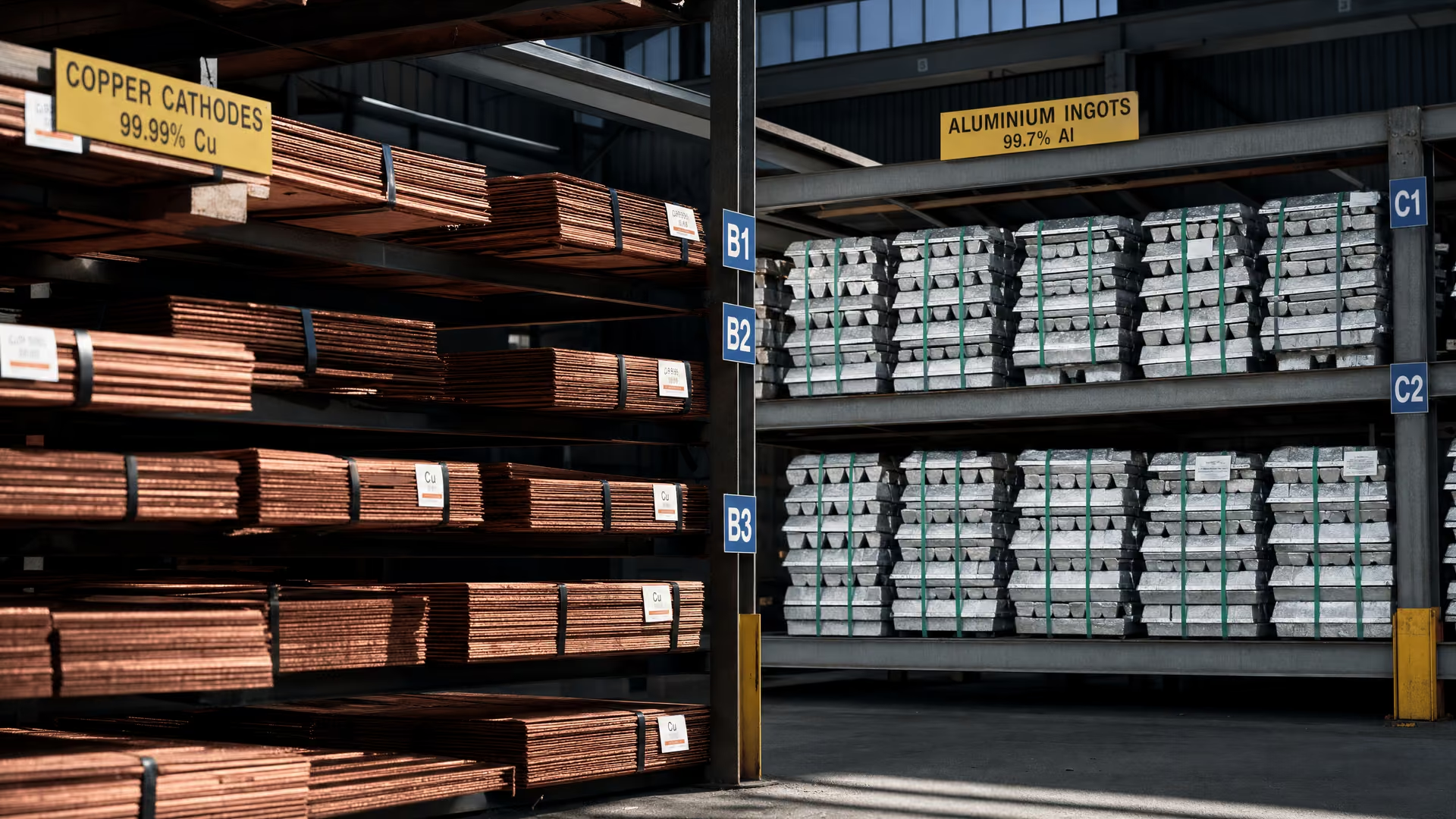
This is genuine scarcity, not tariff speculation from Washington.
Stainless Espresso, 12 August 2026
Aluminium rises without the same spot-market stress
Aluminium has also moved higher, but the structure of its market is different. Over the same cited period, LME aluminium rose from USD 3,260 to USD 3,373 per tonne, an increase of around 3.5%. Inventories declined from 262,650 to 253,400 tonnes. That is a tightening signal, but it is not accompanied by the same immediate-delivery premium seen in copper.
Cash aluminium was priced at USD 3,373 per tonne against USD 3,374 for delivery in three months. The near equality between the two prices is central to the substitution argument. It indicates that the market was not assigning a comparable premium to aluminium for immediate availability during the period described.
LME cash prices in the cited comparison
LME cash prices in the cited comparison (USD per tonne)
The principal market points can be set out directly from the report:
| Metric | Copper | Aluminium | Source |
|---|---|---|---|
| LME cash price | USD 14,424.50 per tonne on 11 August | USD 3,373 per tonne | Copper Above USD 14,400: Aluminium Becomes an Alternative |
| Earlier price reference | USD 14,290 per tonne on the previous day | USD 3,260 per tonne at the start of the cited period | Copper Above USD 14,400: Aluminium Becomes an Alternative |
| Inventory movement | More than 244,000 tonnes on 3 August to 214,550 tonnes | 262,650 tonnes to 253,400 tonnes | Copper Above USD 14,400: Aluminium Becomes an Alternative |
| Three-month relationship | Cash premium of USD 207.50 per tonne | USD 3,373 cash versus USD 3,374 three-month | Copper Above USD 14,400: Aluminium Becomes an Alternative |
The comparison does not mean aluminium is insulated from supply pressure. Its inventories also fell and its price rose. It does mean that the immediate market incentive to examine substitution is being driven primarily by copper’s price and availability signal, rather than by a parallel aluminium squeeze.
Cable performance makes aluminium a practical substitute
The substitution case rests on more than the difference between two exchange prices. Both copper and aluminium can transmit electricity. Aluminium is less conductive, but it is significantly lighter, and the two characteristics partly offset one another in cable design. An aluminium cable must be thicker to provide comparable performance, yet the finished cable weighs only around half as much as a copper cable with the same performance, according to the source.
That weight advantage becomes commercially important when it is combined with the price gap. Copper costs more than four times as much per tonne as aluminium in the comparison. If the application requires only half as much metal by weight and the aluminium costs roughly one quarter as much per tonne, the resulting material cost is approximately one eighth of the copper equivalent. The calculation is a material-cost comparison; it does not remove the engineering and installation differences between the two conductor materials.
The trade-off is straightforward but consequential: the larger aluminium cross-section needs more space, and the connections are more demanding. Those constraints prevent a simple one-for-one replacement in every installation. They also explain why the question is application-specific rather than a universal argument for one metal.
For a buyer or design engineer reviewing a copper application, the relevant questions are therefore:
- Whether the installation has enough space for the thicker aluminium cable.
- Whether the connection design can accommodate the more demanding aluminium interface.
- Whether the application is an established use for aluminium, such as overhead power lines and distribution grids.
- Whether the economics justify reviewing aluminium in underground cables, household connections, data centres or charging infrastructure.
The engineering compromise is visible in the cable cross-section

Market substitution can move faster than raw-material policy
The report places the copper-aluminium decision within a wider debate over raw-material security. Brussels is responding to supply risks through lists, target quotas and the Critical Raw Materials Act. Those measures address the strategic problem at policy level, but the market is using a different mechanism: changing the material selected for an application when the relative cost and availability make the existing choice harder to justify.
The timing is the important distinction. The source says substitution can take place within months, rather than waiting for planned economic approval cycles. That does not make policy irrelevant, nor does it remove the need for technical validation. It means that a sharp spot-market signal can prompt commercial and engineering reviews before a public raw-material strategy has produced a measurable change in supply.
This is particularly relevant in the area between established overhead-grid use and highly space-constrained installations. Underground cables, household connections, data centres and charging infrastructure are identified as areas where calculations may carry more weight than established purchasing habits. In those applications, the decision depends on the balance between conductor performance, available space, connection requirements and delivered material cost.
Substitution is taking place within months rather than planned economic approval cycles.
Stainless Espresso, 12 August 2026
What the copper price means for buyers
The immediate purchasing message is not that aluminium can replace copper everywhere. It is that buyers managing copper exposure should identify which applications can technically and commercially work with aluminium. The current price structure is already forcing that question: immediate copper is substantially more expensive than three-month material, while cash and three-month aluminium are virtually aligned in the cited comparison.
The availability picture also needs to be monitored on both sides of the decision. Copper inventories fell materially between 3 and 11 August. Aluminium inventories declined over the cited period as well, and the report separately states that LME aluminium inventories had already more than halved in 2026, which it presents as evidence of rising demand and tighter availability. Aluminium is therefore an alternative under pressure, not an unlimited reserve of supply.
A practical review should remain confined to the applications where the engineering requirements and material economics can be assessed together:
- Identify applications in which the larger aluminium cable cross-section can be accommodated.
- Check whether the connection requirements can be met without offsetting the material-cost advantage.
- Separate established aluminium uses, including overhead power lines and distribution grids, from applications requiring a fresh technical assessment.
- Compare the cost of immediately available copper with the relevant aluminium alternative rather than relying only on long-term reference prices.
- Continue monitoring aluminium availability as substitution increases demand for the alternative material.
The central commercial issue is consequently not a simple copper-versus-aluminium price ranking. It is whether a specific cable or electrical application can absorb aluminium’s larger cross-section and more demanding connections while retaining the required performance. Where the answer is yes, the current copper premium makes substitution a live procurement question.
Copper’s move above USD 14,400 per tonne has turned aluminium substitution from a general efficiency discussion into an immediate procurement and design question. The economics are strongest where additional cable space and more demanding connections can be accommodated, but aluminium’s own tightening availability means buyers must assess the complete supply and engineering picture rather than treat it as a frictionless replacement.
Sources
- June 2026 crude steel production (worldsteel.org)
- Access Temporarily Restricted (worldsteel.org)
- Agency Information Collection Activities; Submission to the Office of Management and Budget (OMB) for Review and Approval; Comment Request; Steel Import License (federalregister.gov)
- Rescission of Antidumping and Countervailing Duty Administrative Reviews (federalregister.gov)
- AISI Releases July SIMA Imports Data (steel.org)
- AISI Releases Annual Statistical Report for 2025 (steel.org)
- Mercato (federacciai.it)
- Mercato nazionale (federacciai.it)
- Copper Above USD 14,400: Aluminium Becomes an Alternative – Stainless Espresso (steelnews.biz)
- Why Does the IW Not Sweep Its Own Doorstep When It Comes to Tariffs? – Stainless Espresso (steelnews.biz)