

The European Union’s surface-technology sector can comment until 19 August 2026 on draft E DIN 50940-2, covering methods to assess hydrogen uptake during steel

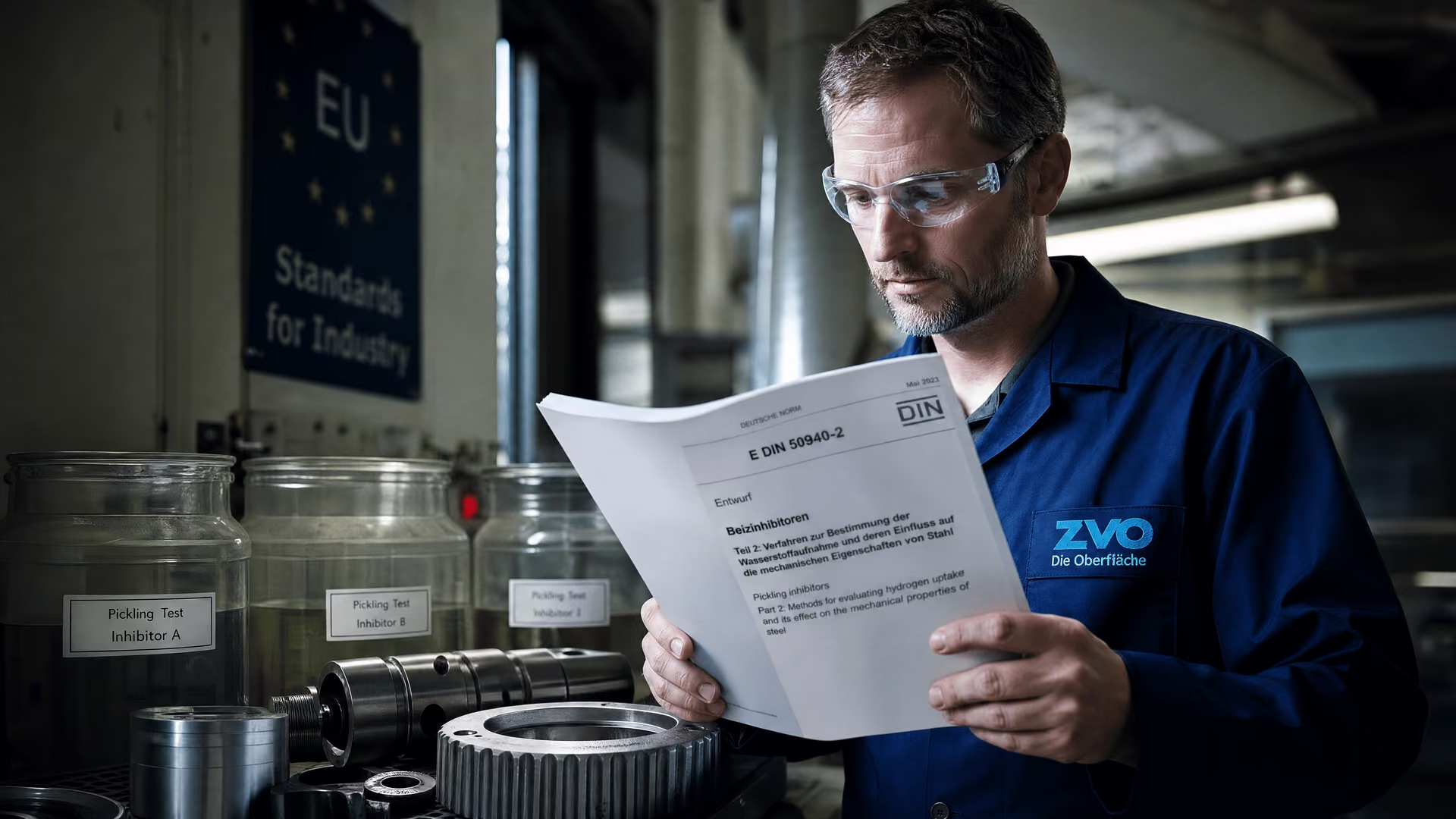
The European Union’s surface-technology sector now has until 19 August 2026 to comment on the newly published draft standard E DIN 50940-2, which sets out methods for evaluating hydrogen uptake during the pickling of steel components and the resulting effect on mechanical material properties. The German surface-technology association Zentralverband Oberflächentechnik (ZVO) has drawn attention to the document, whose issue date is July 2026.
EU comment period opens for E DIN 50940-2
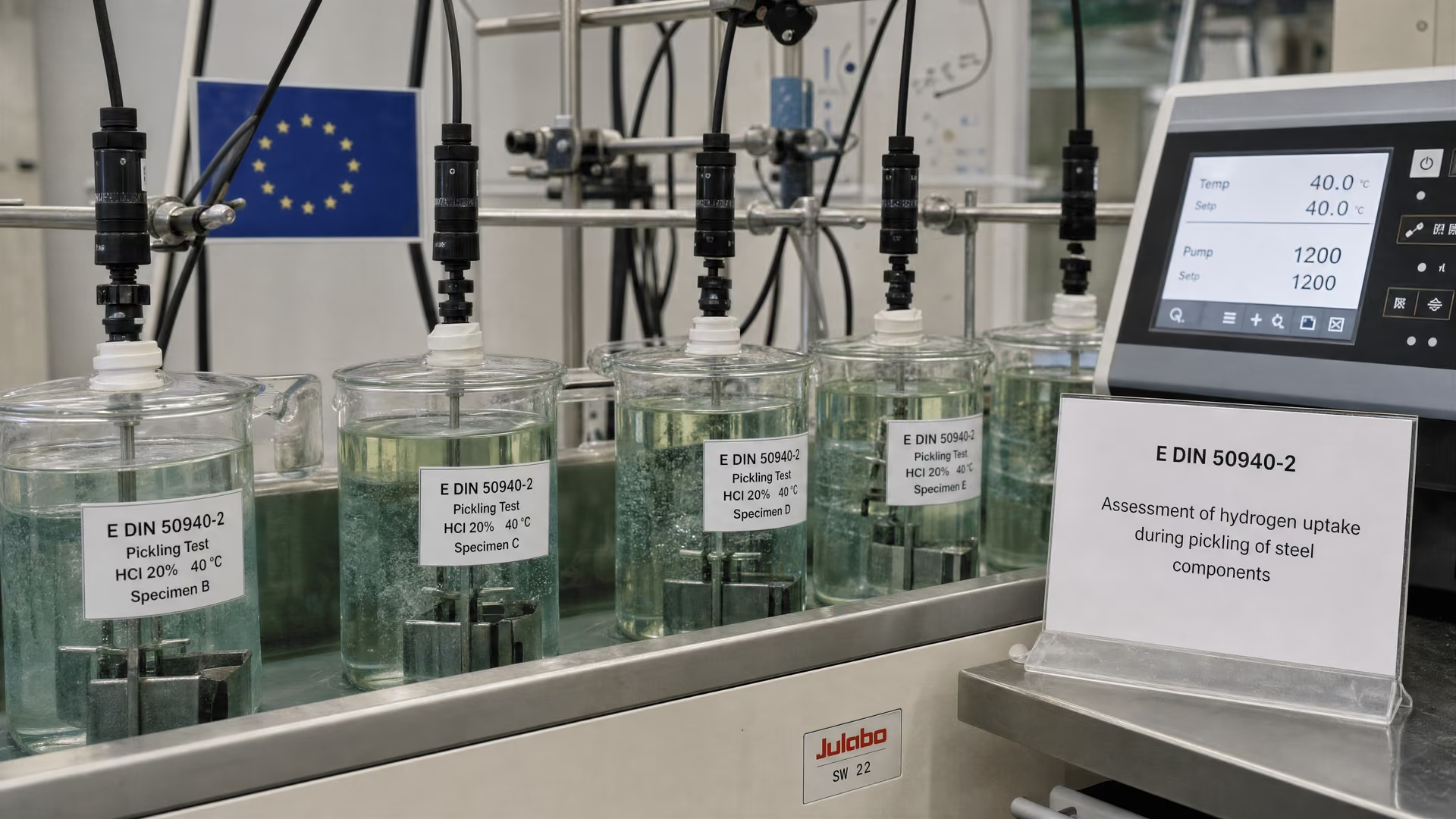
The publication places a specific test-method proposal into the European standards discussion. E DIN 50940-2 addresses the evaluation of pickling inhibitors, focusing on how effectively they limit hydrogen uptake when steel components are treated in aqueous acidic solutions. The draft is not presented as a general revision of steel grades or pickling specifications. Its subject is narrower: the methods used to determine inhibitor performance and the potential consequences of hydrogen entering the material during treatment.
The notice reported by oberflaeche.de is dated 17 July 2026. It states that comments may be submitted through the Norm-Entwurfs-Portal until 19 August 2026, while the draft itself can be obtained through DIN Media. That gives companies and technical specialists a defined period in which to examine the proposed methods and submit observations before the standards process moves beyond the consultation stage.
The immediate reference points are:
What the draft standard covers
The proposed document is titled, in English translation, Determination of the Inhibiting Effect of Pickling Inhibitors – Part 2: Methods for Determining Hydrogen Uptake and Its Effect on the Mechanical Material Properties. The designation matters because it identifies the document as E DIN 50940-2, rather than as a completed DIN standard. The source describes the text as a new draft for discussion and identifies its technical focus as hydrogen uptake during the pickling of steel components.
The scope described in the ZVO draft-standard notice connects three elements that are often handled by different technical teams: the pickling process, the inhibitor used to control its effect, and the mechanical properties of the steel after hydrogen uptake has been assessed. The document therefore concerns a measurement and evaluation task rather than a product designation.
For readers working with steel-processing specifications, the main elements of the proposal are:
- Steel components treated by pickling in aqueous acidic solutions.
- The inhibiting effect of pickling inhibitors on hydrogen uptake.
- Methods for determining the amount or effect of hydrogen uptake as described by the draft.
- The relationship between hydrogen uptake and mechanical material properties.
- Use of the test methods in inhibitor development, inhibitor release and industrial process monitoring.
The notice does not provide numerical acceptance limits, a prescribed inhibitor formulation or a specific steel-grade list. Those omissions are important when interpreting the publication: the information supplied supports a report about proposed assessment methods, not a claim that the draft introduces a new universal performance threshold for pickling inhibitors.
A technical illustration of the proposed scope would bring together the material, the process and the measurement task:
Two intended uses: development and production control
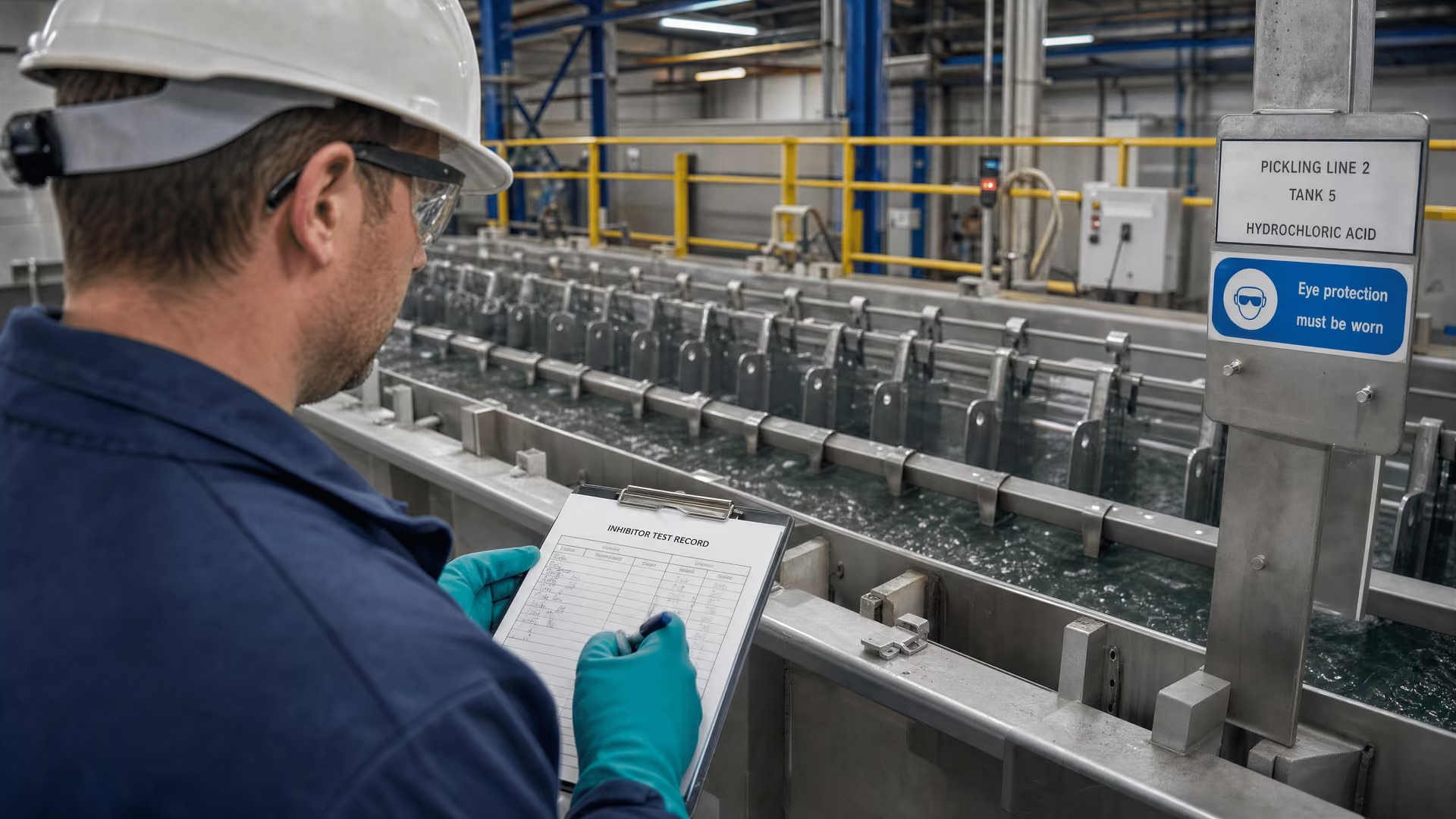
The draft is designed for both laboratory and industrial contexts. According to the source report, its methods can be used in the development and release of pickling inhibitors. They are also intended for industrial application, including process monitoring in coating operations where the risk of hydrogen embrittlement is being considered.
From inhibitor development to release
In development work, the proposed methods provide a basis for examining whether an inhibitor limits hydrogen uptake during steel pickling. Inhibitor release is a separate operational point: the source explicitly identifies release as an intended use, placing the draft within the quality-assurance chain between development work and application.
The notice does not describe the release procedure in detail, nor does it identify a particular chemical product or supplier. It does, however, make clear that the draft is intended to support assessment of inhibitor effectiveness rather than merely document the presence of an inhibitor in a process bath.
Industrial process monitoring
The second use is closer to day-to-day production control. The methods are described as suitable for industrial application, including monitoring coating processes with respect to the risk of hydrogen embrittlement. For a surface-treatment operation, that places the proposed test methods alongside process-control activities rather than limiting them to one-time research or qualification work.
The practical distinction between the two intended uses can be summarised as follows:
| Technical element | What the draft addresses | Potential setting | Source |
|---|---|---|---|
| Material and process | Steel components pickled in aqueous acidic solutions | Surface-treatment operations | ZVO draft-standard notice |
| Performance question | Whether a pickling inhibitor limits hydrogen uptake | Inhibitor assessment | ZVO draft-standard notice |
| Development and release | Methods for checking inhibitor effectiveness | Development and release decisions | ZVO draft-standard notice |
| Industrial application | Process monitoring linked to hydrogen-embrittlement risk | Coating-process control | ZVO draft-standard notice |
This dual application is the draft’s principal operational significance in the information currently available. It links the evaluation of an inhibitor with both its technical development and its use under industrial process conditions, while keeping hydrogen uptake and material-property effects at the centre of the assessment.
Why hydrogen uptake is central to the proposal
Pickling is the process context named by the draft, but hydrogen uptake is the measurement issue that gives the proposal its engineering relevance. The document is intended to describe methods for determining that uptake and its effect on the mechanical material properties of steel components. The source also connects the methods with the risk of hydrogen embrittlement in coating-process monitoring.
Methods for determining hydrogen uptake and its effect on the mechanical material properties.
English rendering of the subject stated for E DIN 50940-2
That wording places the draft between process chemistry and materials performance. It does not treat inhibitor effectiveness as an isolated bath-control issue. Instead, the proposed assessment follows the question through to the steel component and its mechanical properties. For metallurgists and quality engineers, that is the relevant boundary: the concern is not only whether pickling proceeds, but how inhibitor performance is evaluated in relation to hydrogen entering the steel.
The supplied facts do not state which mechanical tests, hydrogen-measurement techniques or steel grades are included in the draft. Those details would need to be taken from the document obtained through DIN Media. The published notice supports the narrower finding that the draft establishes methods for examining hydrogen uptake and its effect on mechanical material properties, with application in both inhibitor evaluation and industrial monitoring.
For procurement and process documentation, the distinction between a proposed method and a final requirement should remain clear. Until the consultation and subsequent standards work are complete, E DIN 50940-2 should be treated as a draft reference under discussion, not as evidence of a completed mandatory specification.
The technical relationship described by the draft can be represented as a process chain:
- Steel components are treated in aqueous acidic pickling solutions.
- The performance of the pickling inhibitor is assessed in relation to hydrogen uptake.
- The effect of that uptake on mechanical material properties is determined using the proposed methods.
- The results can support inhibitor development, release and industrial process monitoring.
DIN committee responsible for the draft
The draft was prepared by working committee NA 062-02-105 AA, identified in the source as the committee for chemical and electrochemical coatings within the DIN Materials Testing Standards Committee (NMP). The committee assignment places E DIN 50940-2 within the materials-testing side of the DIN standards structure, while its subject remains closely tied to surface treatment and corrosion protection.
That institutional position is relevant to how the document should be read. The draft is not described as a commercial recommendation from an inhibitor supplier, and the source does not identify a proprietary technology. It is a committee-developed proposal for test methods covering inhibitor effectiveness, hydrogen uptake and mechanical material properties.
The publication also illustrates the division of roles around the document. ZVO has alerted the surface-technology industry to the draft, while the DIN working committee is identified as the body that prepared it. DIN Media is named as the route for obtaining the draft, and the Norm-Entwurfs-Portal is identified as the channel for comments.
What European steel processors should monitor next
The next immediate step is consultation. The deadline of 19 August 2026 applies to comments on the draft through the Norm-Entwurfs-Portal. Companies involved in steel pickling, coating-process control or inhibitor development will need to review the actual draft to determine how its proposed methods relate to their existing test and monitoring arrangements.
The published information supports four practical review points:
- Whether the proposed methods address the steel components and aqueous acidic pickling conditions used in a particular operation.
- How the draft defines the assessment of inhibitor effectiveness and hydrogen uptake.
- How results are connected to the mechanical material properties of the treated steel.
- Whether the methods are intended to support development, inhibitor release, industrial process monitoring, or more than one of these uses.
The source does not report the number of comments received, any disagreement over the draft, or a decision to adopt the text. It also does not identify a final version or an implementation date. Those points remain open from the facts supplied and should not be inferred from the publication of the draft itself.
The consultation sequence currently consists of the following dated milestones:
Questions about the draft
What is E DIN 50940-2 about?
It is a draft standard on methods for determining the inhibiting effect of pickling inhibitors, hydrogen uptake during the pickling of steel components and the effect of that uptake on mechanical material properties.
When can comments be submitted?
The source states that comments can be submitted through the Norm-Entwurfs-Portal until 19 August 2026.
Where can the draft be obtained?
The source states that the draft can be obtained through DIN Media.
Who prepared the draft?
It was prepared by working committee NA 062-02-105 AA, the committee for chemical and electrochemical coatings within the DIN Materials Testing Standards Committee (NMP).
Does the publication establish a final requirement for pickling inhibitors?
No such final requirement is stated in the supplied notice. The document is identified as a draft standard under consultation, and the notice describes proposed test methods rather than a completed mandatory specification.
The publication therefore gives European surface-treatment companies a defined document to review, a defined technical subject to assess and a defined date for submitting comments. Its immediate importance lies in the proposed evaluation framework for hydrogen uptake and inhibitor performance, not in a change to a finished standard already in force.
E DIN 50940-2 places hydrogen uptake during steel pickling at the centre of a proposed European test-method discussion. For now, the relevant action is technical review of the draft and submission of comments by 19 August 2026; any final requirements will depend on the subsequent standards process.
Sources
- June 2026 crude steel production (worldsteel.org)
- Access Temporarily Restricted (worldsteel.org)
- Stellungnahme zum Referentenentwurf Gesetz zur Änderung des Kreislaufwirtschaftsgesetzes (KrWG) (wvstahl.de)
- Geschäftsführung und Team (wvstahl.de)
- Agency Information Collection Activities; Submission to the Office of Management and Budget (OMB) for Review and Approval; Comment Request; Steel Import License (federalregister.gov)
- Rescission of Antidumping and Countervailing Duty Administrative Reviews (federalregister.gov)
- AISI Releases July SIMA Imports Data (steel.org)
- AISI Releases Annual Statistical Report for 2025 (steel.org)
- Mercato (federacciai.it)
- Mercato nazionale (federacciai.it)