
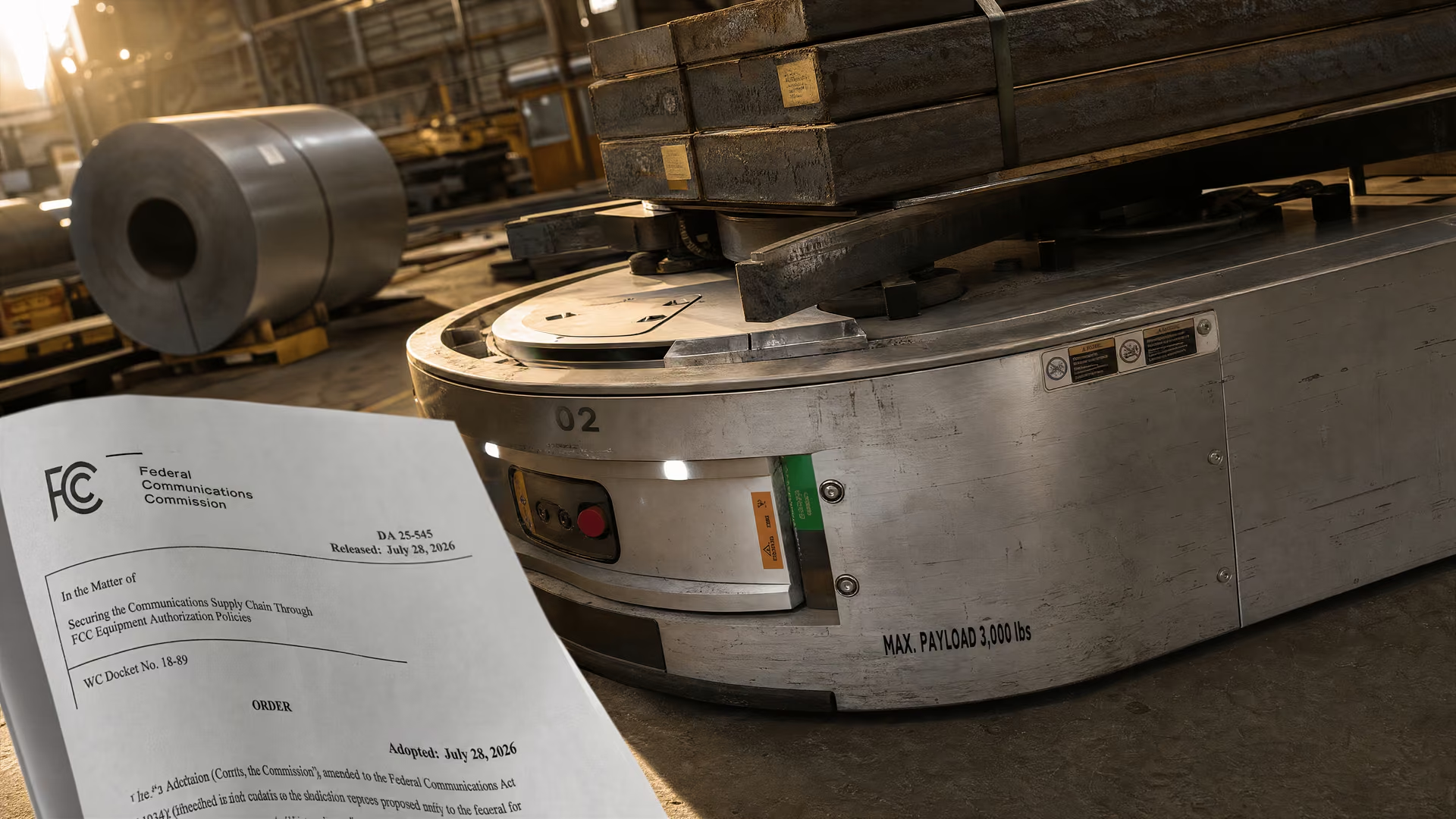



The FCC's July 28 action blocks new foreign-made mobile robots from U.S. equipment authorization while excluding an industrial-robot category used most widely

On July 28, 2026, the U.S. Federal Communications Commission blocked new foreign-made mobile robots from receiving U.S. equipment authorization while excluding by name one industrial-robot category that steel uses most, according to the Steel Industry News account of the action. For steel companies, the immediate issue is therefore not a general ban on robotics but the distinction between mobile platforms, already authorized equipment and the industrial-robot category left outside the measure.
The FCC action creates a forward-looking authorization barrier
The Federal Communications Commission action is framed around U.S. equipment authorization. New foreign-made mobile robots are blocked from entering that authorization pathway, which means a product that has not previously cleared the U.S. process cannot simply be introduced as an ordinary automation purchase. Supporting coverage describes the measure as an update to the FCC Covered List that also includes foreign-produced power inverters, although the steel-specific question is the treatment of robotic devices.
The distinction between new and previously authorized equipment is material. The action does not require steel operators to remove every foreign robot already operating in the United States. Previously approved models can continue to be imported, sold and used, according to coverage of the FCC authorization decision. The measure therefore changes the route for future purchases more directly than it changes the status of existing installations.
The two fixed points for steel technology teams are:
The date matters because the restriction takes effect as a procurement constraint rather than as a distant policy proposal. The excluded category matters because the primary report says it is the category used most widely in steel. That combination produces a much narrower result for steel than the headline focus on humanoid robots suggests.
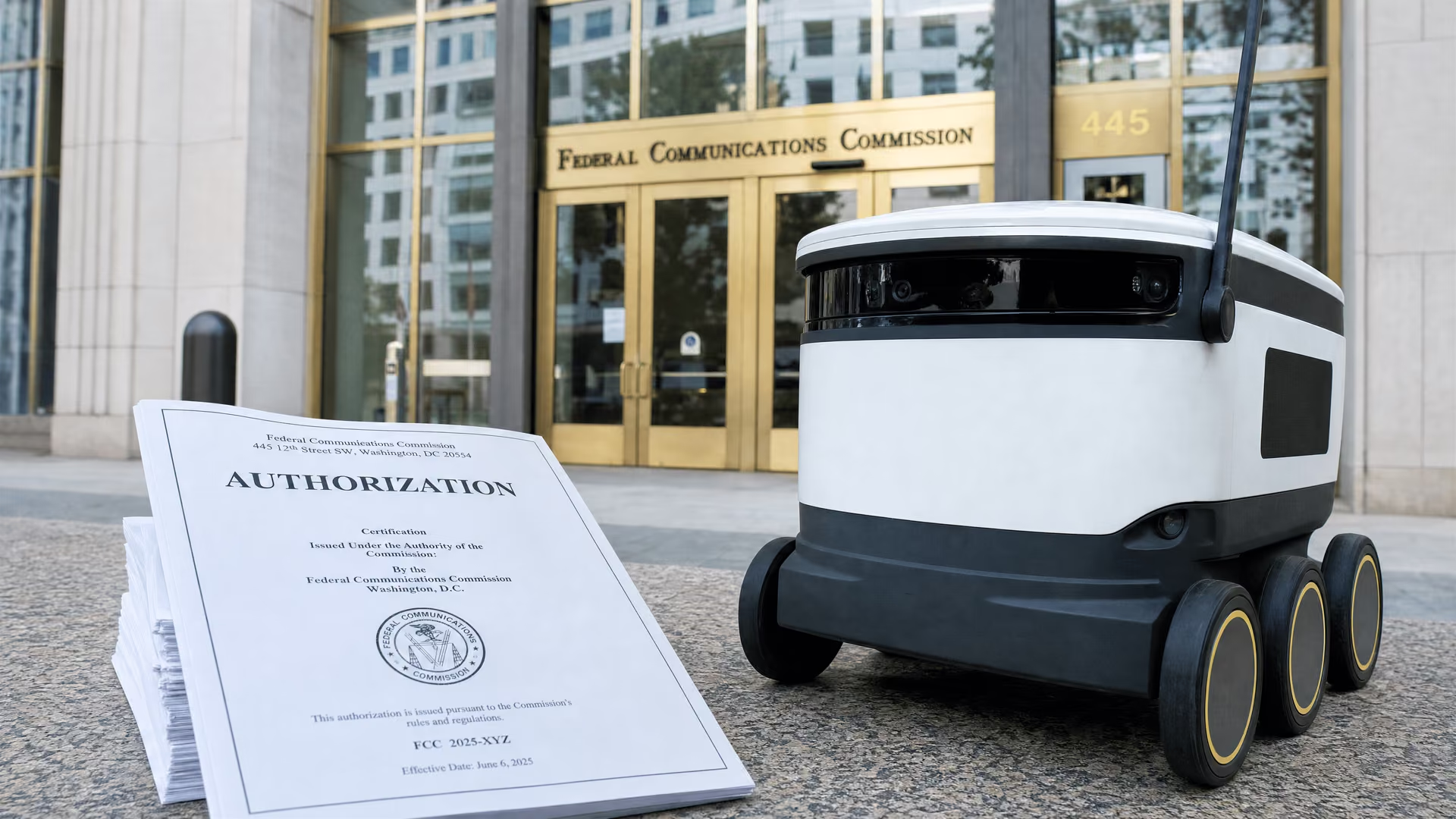
The regulatory gate can be represented by a physical scene as well as a filing:
The rule does not treat every robot in the same way
Mobile, existing and excluded equipment
The most important technical distinction is not whether a machine is described as advanced, autonomous or powered by artificial intelligence. It is whether the proposed equipment is a new foreign-made mobile robot, whether the model was already authorized, or whether it falls within the industrial-robot category the FCC action excluded by name. Reporting on the measure also identifies humanoid and quadruped robots among the new foreign-built forms affected by the policy, placing the most visible machines in the same broader debate.
The practical position of each category can be set out as follows:
| Robot or device position | FCC treatment described | Implication for steel automation | Source |
|---|---|---|---|
| New foreign-made mobile robots | Blocked from receiving new U.S. equipment authorization | Direct exposure for projects built around this mobile format | US Blocked New Foreign Robots | Where the Technology Actually Fits in Steel |
| Previously approved foreign models | May continue to be imported, sold and used | Existing deployments are not automatically displaced | FCC blocks approval of new foreign-made robots and power inverters |
| Industrial-robot category excluded by name | Outside the restriction described by the primary source | The category is identified as the one steel uses most | US Blocked New Foreign Robots | Where the Technology Actually Fits in Steel |
That distinction also explains why the rule has been reported through the lens of national security rather than ordinary industrial-automation policy. Coverage describes concerns that connected robotic devices could create cybersecurity risks to critical infrastructure or be remotely commandeered. For steel operators, however, the commercial question remains concrete: which planned machine requires a new authorization, and which planned machine belongs to a category that the action leaves outside its scope?
Where mobile robotics meets steel operations
Steel's exposure is uneven because automation is deployed across different operating environments. The primary report frames the issue across mills, distribution and service centers, and says the restriction produces three different outcomes: one environment loses its cheapest automation path, one is barely touched, and one retains its strongest business case. The supplied source text does not assign those outcomes to named facilities, so the defensible reading is to map them by technology rather than to assume that every part of the steel chain is affected equally.
A new foreign-made mobile robot is most directly exposed wherever the business case depends on a machine moving through the operating environment rather than remaining in a defined industrial cell. That can include planned concepts involving mobile material handling, logistics or inspection. The same logic applies to humanoid and quadruped systems when they are being considered as new foreign-built machines requiring U.S. authorization.
For a steel buyer or engineering team, the relevant screens are therefore:
- Mobility: determine whether the proposed device is a mobile platform or an industrial robot in the excluded category described by the primary source.
- Authorization status: distinguish a new model seeking U.S. equipment authorization from a model that was already approved.
- Origin: identify whether the equipment is foreign-made or foreign-produced, since that is central to the FCC action.
- Operating purpose: separate mobile logistics, inspection or handling concepts from automation performed by the industrial-robot category steel uses most.
- Cybersecurity exposure: consider whether the proposed connected device falls within the national-security concerns described in coverage of the FCC measure.
This is why the headline discussion of humanoid robotics can mislead steel decision-makers. A humanoid machine attracts attention because of its form, but the authorization consequence follows the regulatory classification and the machine's status in the U.S. market. A steel service center evaluating a new foreign mobile platform faces a different question from a mill or fabricator evaluating equipment in the industrial-robot category identified as outside the restriction.
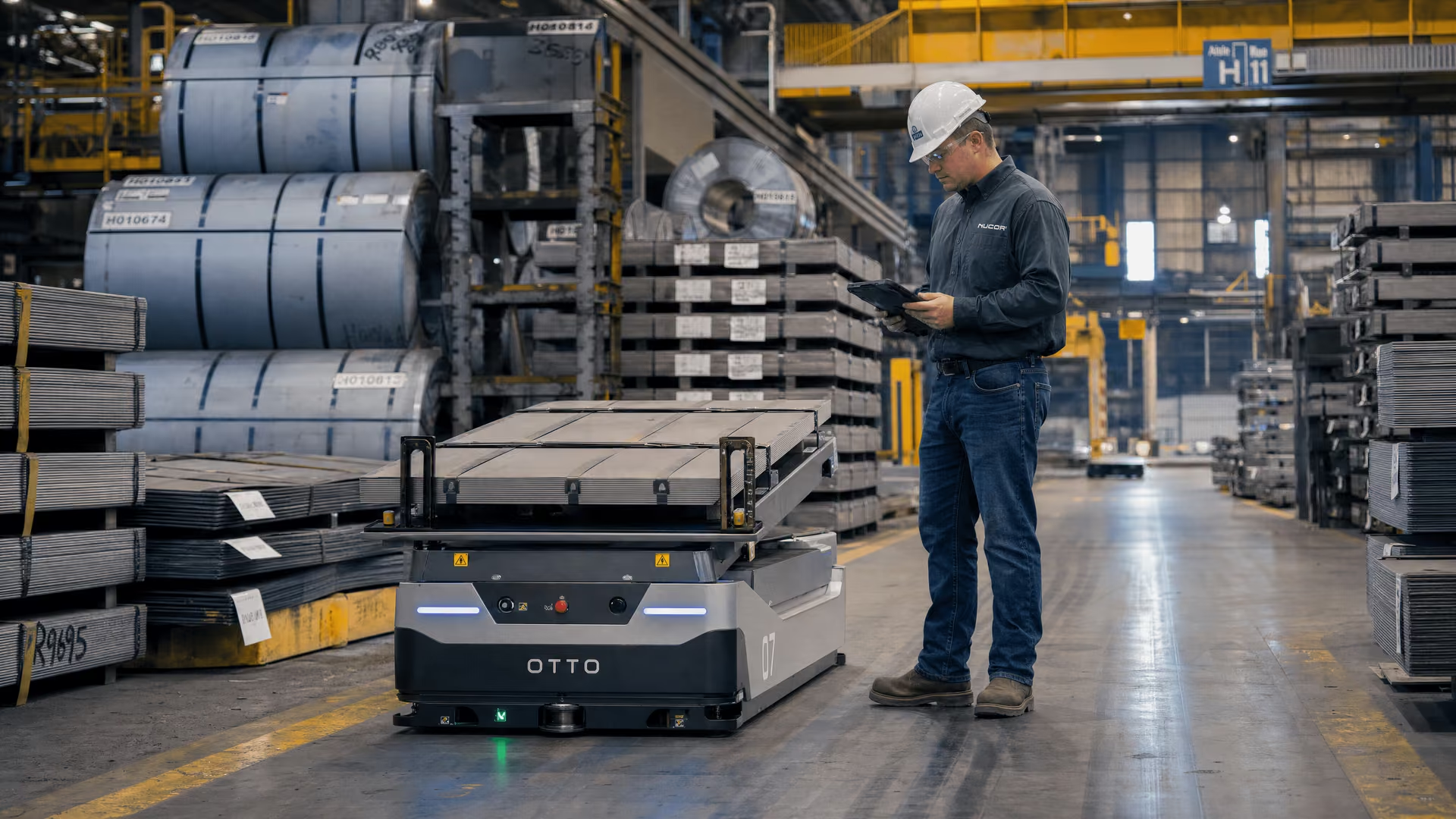
A representative visual for that distinction is:
Why the industrial-robot exception matters more than the humanoid headlines
The central steel finding in the primary report is that an entire industrial-robot category was excluded by name and is also the category steel uses most. That changes the likely commercial reading of the FCC action. The measure may be significant for new mobile automation, but it does not remove the principal industrial-robot route on which the steel sector already relies, as described by the source.
One entire category of industrial robot was excluded by name, and it happens to be the category steel uses most.
Steel Industry News
The distinction is especially important because industrial automation is not a single technology class. A mobile robot, a humanoid machine, a quadruped platform and an industrial robot can be discussed together in general technology coverage while presenting different authorization questions. The FCC action therefore should not be translated into a blanket statement that foreign robotics has been removed from U.S. steelmaking.
Nor does the exclusion mean that every steel automation project is unaffected. The primary report expressly says the restriction lands unevenly across steel. A project whose economics depend on a new foreign mobile machine can face an immediate change in its equipment path, while a project using the excluded industrial-robot category or an already authorized model may not face the same barrier.
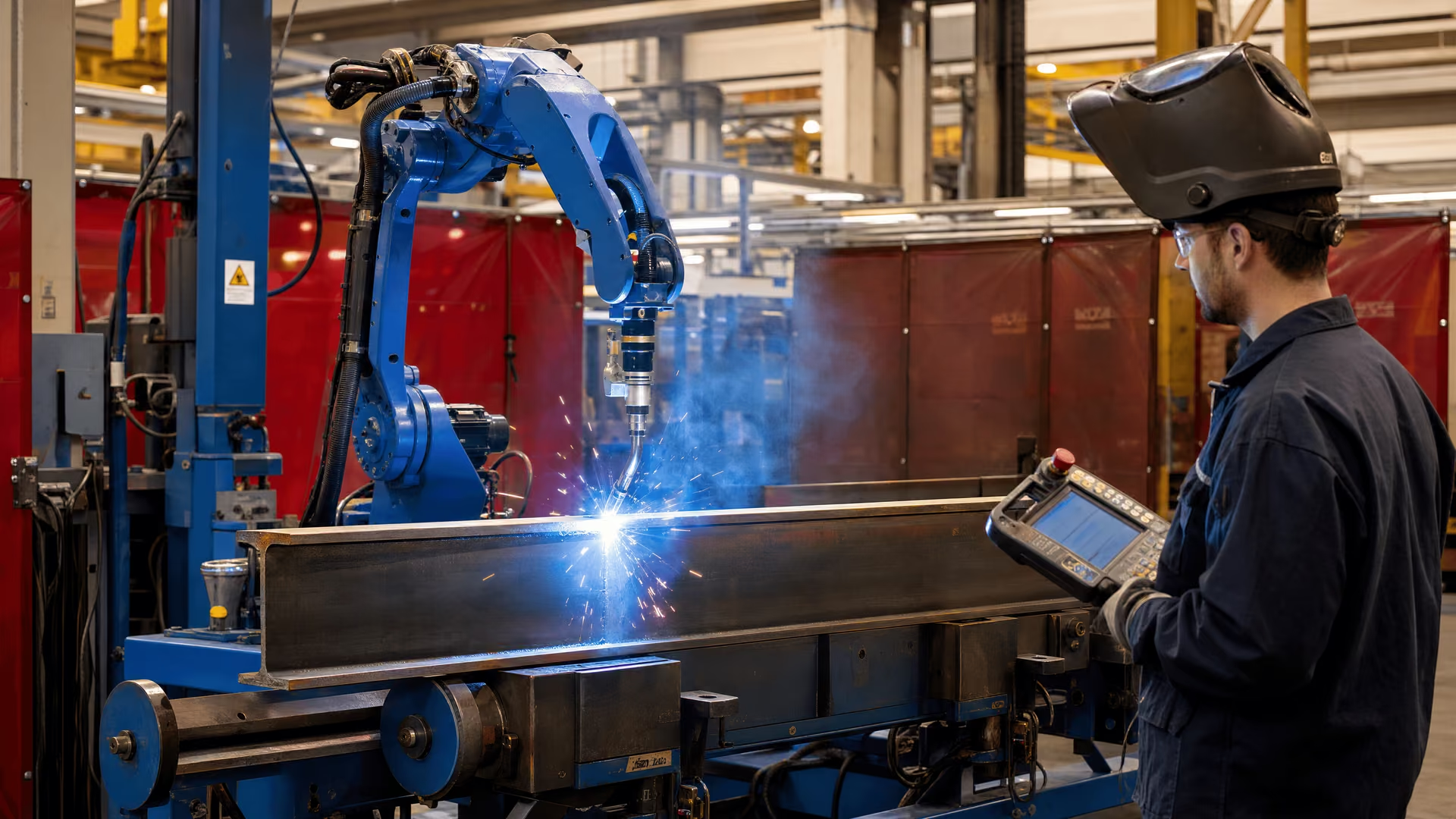
The steel-fabrication context illustrates why classification matters:
How the restriction changes automation sequencing
The immediate consequence for procurement is sequencing. A steel company cannot evaluate a new robotic system only by asking what task it performs or how much labor it may replace. The company must first establish whether the equipment sits inside the FCC action's authorization boundary. A disciplined review would proceed in this order:
- Classify the machine by form and operating mode: mobile robot, humanoid or quadruped platform, or industrial robot in the category described as excluded.
- Confirm whether the equipment is new to the U.S. market or was already authorized. Previously approved models can continue to be imported, sold and used under the supplied facts.
- Verify whether the machine is foreign-made or foreign-produced, because the nationality of the equipment is part of the restriction's definition.
- Separate the technology decision from the policy decision. A strong operational use case does not by itself resolve whether the model can obtain the required U.S. authorization.
- Reassess the automation plan by environment: mill, distribution operation or service center. The primary source indicates that the commercial effect is not uniform across those settings.
This sequence does not establish that a particular project is legally permitted or prohibited. It identifies the factual questions that determine whether the FCC action is relevant to the project at all. The most consequential mistake would be to treat the rule as either a total shutdown of foreign robotics or as an issue limited only to humanoid demonstrations.
For steel buyers, the result is a narrower but more consequential budgeting question. If the business case depends on a new foreign-made mobile robot, authorization risk belongs at the beginning of the project review. If the business case depends on the industrial-robot category that the source says steel uses most, or on a model already authorized, the FCC action occupies a different position in the evaluation.
What the FCC decision leaves open for steel buyers
The supplied facts establish the direction of the policy, but they do not provide a model-by-model equipment list, a complete definition of every covered device or a plant-by-plant assessment of exposure. Those details matter because steel automation projects combine robotics with communications, software, controls and material-handling systems. The article's supported conclusion is therefore a classification framework, not a legal determination for a specific installation.
The action also leaves a distinction between technology availability and technology economics. The primary report says one steel environment loses its cheapest automation path, while another retains its strongest business case. That language indicates a commercial effect beyond simple availability: a project may still have an automation objective, but the restricted equipment route may no longer be the available low-cost option.
The questions most likely to recur in steel procurement reviews can be answered from the supplied record:
Frequently asked questions
Did the FCC block every foreign robot already operating in the United States?
No. Supporting coverage says previously approved models can continue to be imported, sold and used. The action is directed at new foreign-made robots seeking U.S. equipment authorization.
Are humanoid robots the only machines affected?
No. The primary source says the action covers far more than humanoid machines, while supporting coverage identifies humanoid and quadruped robots among the new foreign-built forms affected.
Does the action affect the main industrial-robot category used by steel?
The primary source says one entire industrial-robot category was excluded by name and identifies it as the category steel uses most. That makes its treatment materially different from the treatment of new foreign-made mobile robots.
What should a steel automation review establish first?
It should establish whether the machine is mobile, whether it is new or previously authorized, whether it is foreign-made or foreign-produced, and whether it falls within the industrial-robot category described as excluded.
The practical reading for steel is narrower than the humanoid-robot headlines: July 28 created a new authorization barrier for new foreign-made mobile robots, but it did not erase the industrial-robot category the sector uses most or automatically displace already authorized models. Steel companies assessing automation therefore need to map each project by mobility, category, origin and authorization status before treating the FCC action as either a general robotics ban or a non-event.
Sources
- US Blocked New Foreign Robots | Where the Technology Actually Fits in Steel (steelindustry.news)
- HRC CSP Rises To $1,160 | Monthly Shipments Hit A 20-Year High (steelindustry.news)
- Handheld laser welding finds its place in metal fabrication (thefabricator.com)
- Simulating a welding automation plan (thefabricator.com)
- Moldova had halved the cost of transit for Ukrainian goods by rail by the end of 2026 (gmk.center)
- Global prices for coking coal showed mixed trends in August (gmk.center)
- Aperam establishes titanium center of excellence in New York (stainless-steel-world.net)
- Gartner to deliver façade for KYKLOS Centre (stainless-steel-world.net)
- Lanxess Replaces Natural Gas with Hydrogen at Pigment Plant (chemanalyst.com)
- US Iron Oxide Prices Climb Amid Tighter Availability and Rising Import Costs (chemanalyst.com)