

India's steel minister says steel will remain central to renewable energy, batteries and hydrogen, with capacity targeted at 300 million tonnes by 2030.

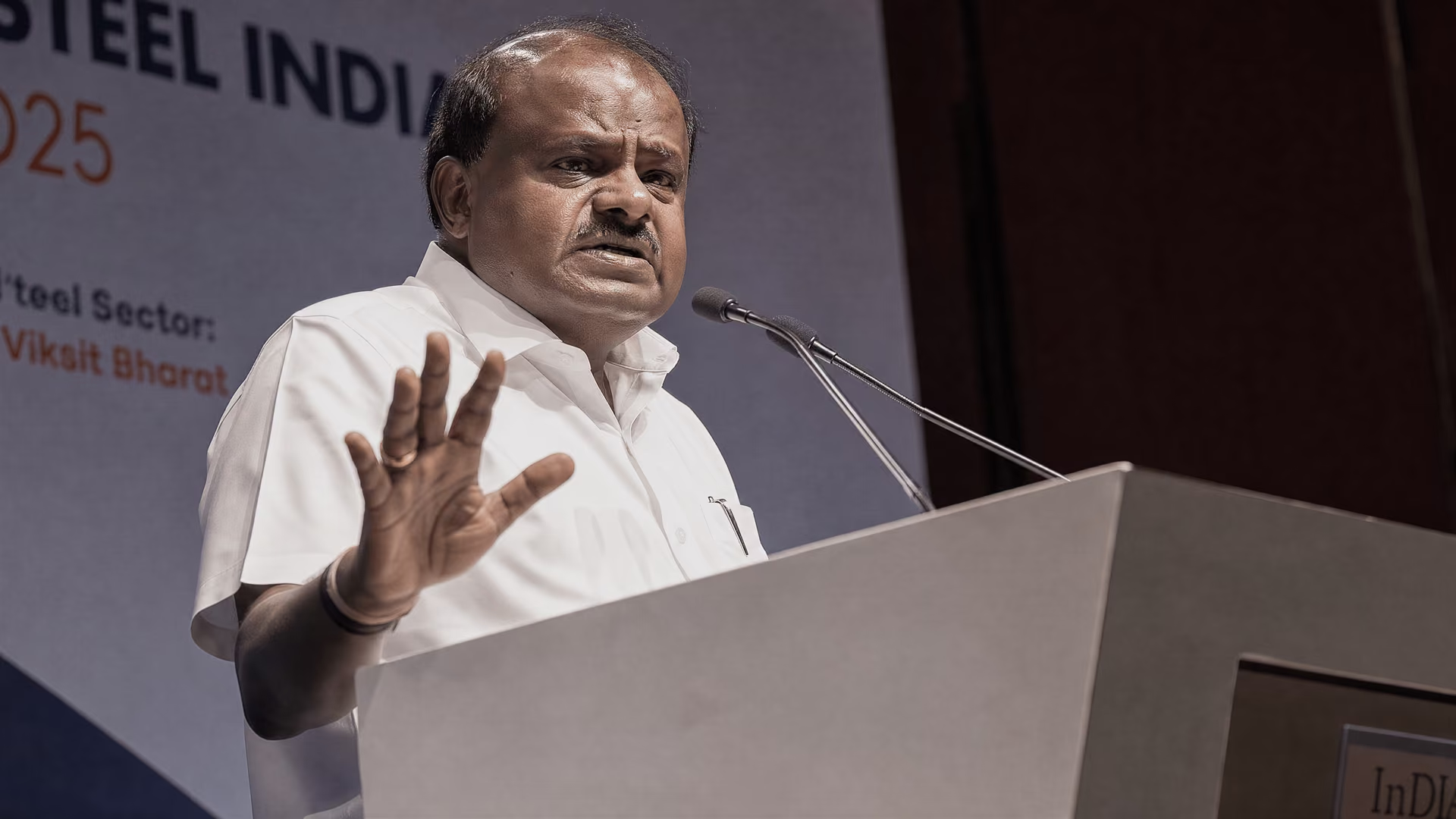
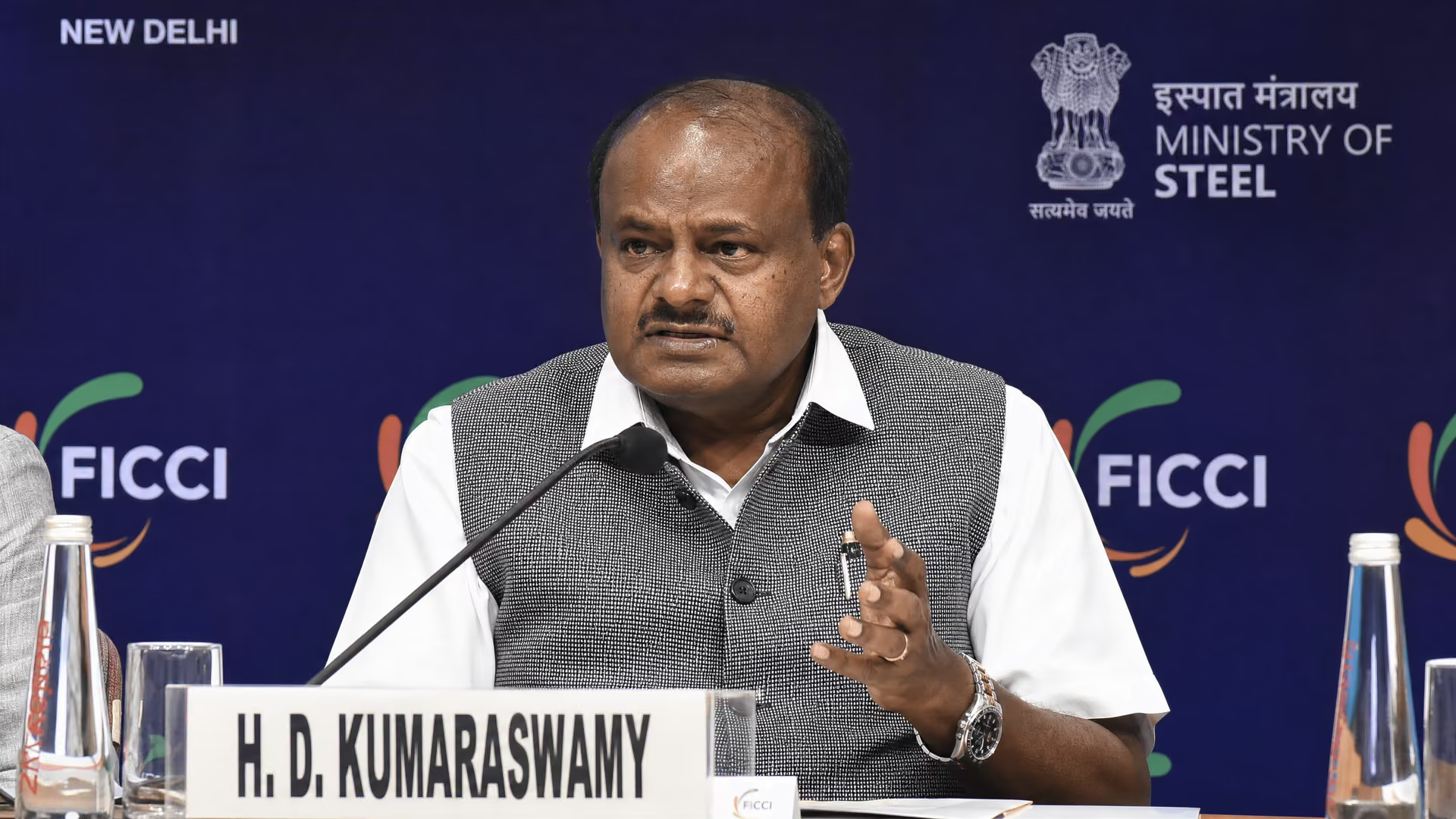
India’s Steel Minister H.D. Kumaraswamy has reaffirmed a 300 million-tonne steelmaking capacity target for 2030, saying steel will remain central to the country’s energy transition. Speaking at an industry conference, he identified renewable-energy infrastructure, battery plants and hydrogen projects as major sources of future steel demand while calling for capacity growth based on environmental performance, competitiveness and technological progress.
India links steel capacity to the energy transition
Kumaraswamy’s remarks, reported by GMK Center in its account of the minister’s statement, place steel at the centre of India’s industrial response to decarbonisation. The minister said the material would be required across renewable-energy infrastructure, battery manufacturing and hydrogen projects. His argument is therefore broader than a conventional demand forecast: steel is being presented as both an input to clean-energy equipment and a strategic manufacturing sector in its own right.
The minister described India as the world’s second-largest steel producer and said the country was positioned to serve rising domestic demand while also meeting global demand for green steel. That dual objective matters for the structure of the expansion. Capacity must support India’s own infrastructure and manufacturing programmes, but the government also wants domestic industry to compete in international markets where environmental performance is becoming a more important commercial consideration.
Steel has become the cornerstone of the global energy transition.
H.D. Kumaraswamy, India’s Minister of Steel
Clean-energy projects create several steel demand channels
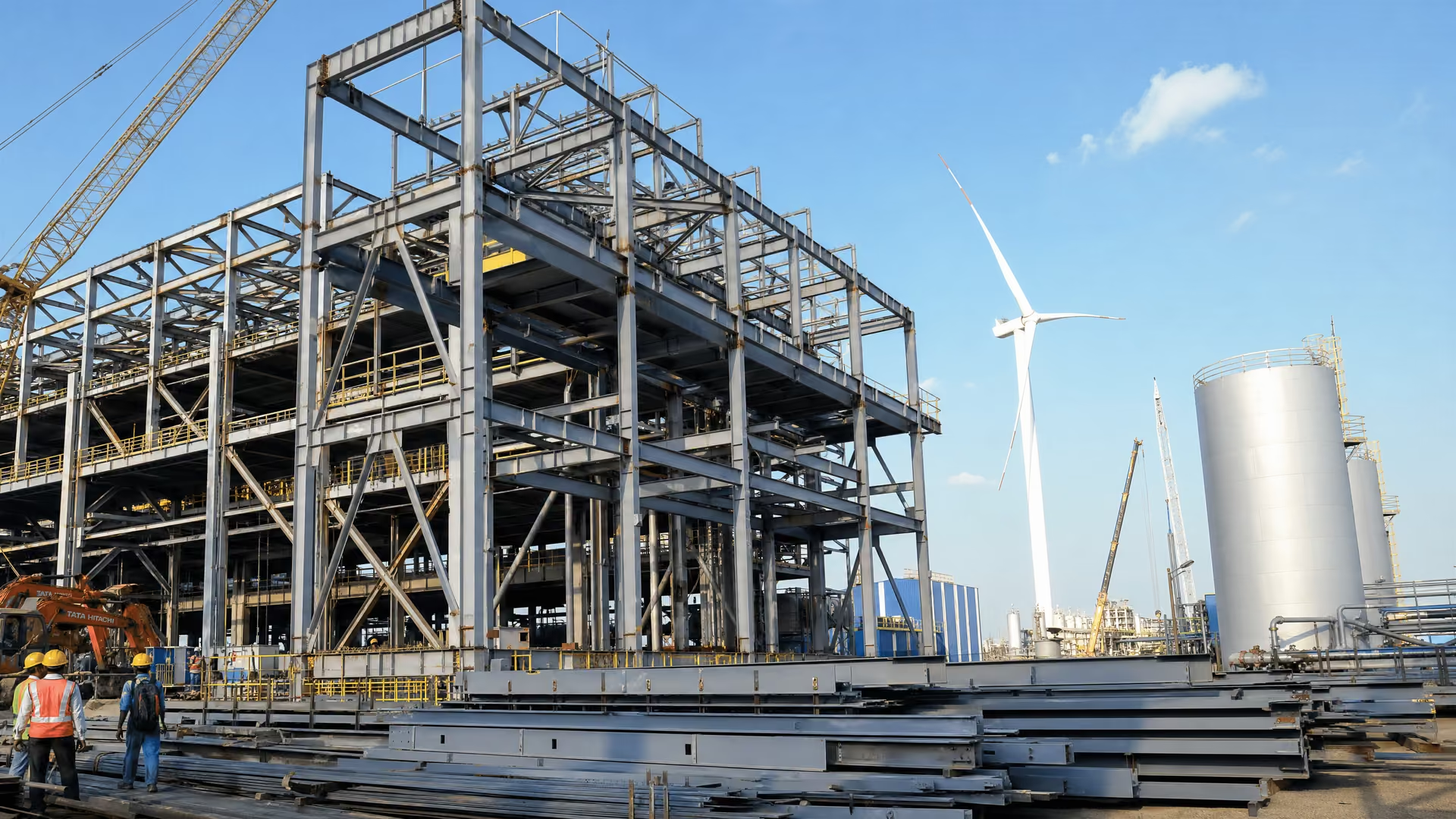
The minister’s position rests on the physical requirements of the energy transition. Renewable-energy infrastructure, electric mobility and hydrogen production involve different industrial systems, but all three require steel components, structures or equipment. The source does not quantify demand by project type; it identifies the sectors as part of the rationale for retaining steel at the heart of India’s transition.
The principal channels described by the minister are:
- Renewable-energy infrastructure, which will require steel for the equipment and supporting structures associated with new energy systems.
- Battery plants and electric mobility, which connect steel demand with vehicle manufacturing and the wider industrial ecosystem targeted by India’s PM E-DRIVE scheme.
- Hydrogen projects, which add another steel-intensive industrial application to the transition agenda.
- Domestic production of equipment, materials and technologies, which the minister identified as preferable to relying primarily on India as a consumer of imported clean-energy technologies.
This framing also explains why the minister linked steel policy to job creation and value generation. The stated objective is to build fully fledged Indian manufacturing ecosystems rather than limit the country’s role to downstream consumption. Steel capacity is consequently being treated as part of a wider industrial base that can supply energy-transition projects and support domestic manufacturing activity.
The relationship between the applications and the policy instruments can be summarised as follows:
| Sector | Role described in the source | Associated Indian initiative or objective | Source |
|---|---|---|---|
| Renewable-energy infrastructure | Steel is required for infrastructure supporting renewable energy | Build domestic equipment and materials capability | Steel will remain a key element of India’s energy transition – minister |
| Battery plants | Steel demand is linked to battery manufacturing facilities | Production-Linked Incentive scheme for advanced-chemistry batteries | Steel will remain a key element of India’s energy transition – minister |
| Electric mobility | Steel supports the manufacturing ecosystem around electric mobility | PM E-DRIVE scheme for comprehensive electric mobility ecosystems | Steel will remain a key element of India’s energy transition – minister |
| Hydrogen projects | Hydrogen development is identified as a future steel-demand channel | Industrial transformation and green-steel ambition | Steel will remain a key element of India’s energy transition – minister |
Industrial policy is intended to capture more value at home
Kumaraswamy highlighted two central initiatives as drivers of India’s industrial transformation: the PM E-DRIVE scheme, intended to create comprehensive electric-mobility ecosystems, and the Production-Linked Incentive scheme for advanced-chemistry batteries. In the minister’s presentation, these programmes are connected to a broader objective of developing Indian manufacturing systems that create value and jobs.
The policy emphasis is not simply on adding steelmaking capacity. It is on connecting steel to equipment, materials and technology production. That distinction is important for the energy-transition strategy because a larger domestic steel base can serve several industrial stages, while the minister’s stated objective goes further by seeking leadership in the manufacture of clean-energy technologies themselves.
Separate supporting coverage indicates that the domestic-policy framework is already attracting capital in specialty steel. A Business Standard report on the specialty-steel PLI scheme puts reported company investment under the programme at ₹26,320 crore. That figure is not presented in the GMK report as part of the minister’s conference remarks, but it provides context for the stated effort to expand domestic production and higher-value manufacturing.
The 2030 target is accompanied by near-term capacity approvals
India’s 2030 ambition is supported by a recent expansion pipeline. Between April and June, the country granted permits for an additional 11.6 million tonnes of steel production capacity, according to the primary report. The permits represent authorised expansion rather than completed or operating output, but they show that the capacity objective is being pursued through projects moving through the approval process.
The relationship between the near-term approvals and the longer-term national target is visible in this sequence:
The minister’s wording adds an environmental condition to the volume objective. The target is not described solely in terms of tonnes; it is tied to environmentally sound practices, sustainable development and technological progress. For producers and project developers, that means the capacity figure is part of a policy direction in which the route to production and the competitiveness of the resulting steel are also relevant.
Environmental performance and competitiveness remain unresolved tests
Kumaraswamy said the future of steel would be determined not only by production capacity but also by sustainable development, competitiveness and technological progress. That formulation places limits on reading the 300 million-tonne objective as a simple volume expansion. The government’s stated ambition combines scale with a transition in how steel is produced and positioned in domestic and international markets.
The wider Indian market context includes both growth potential and pressure on execution. India Ratings and Research, as reported in coverage of India’s steel-market outlook for FY27, expects India to remain among the fastest-growing steel markets while identifying global oversupply, geopolitical uncertainty, evolving trade barriers and tightening sustainability regulations as sector issues.
Those conditions make the minister’s reference to competitiveness significant. Indian producers seeking to serve domestic infrastructure and global green-steel demand will operate in a market shaped not only by consumption growth but also by changing requirements around sustainability and trade. The available facts do not specify a particular emissions threshold, production route or certification system for the 2030 target. They do establish that environmental performance and technological progress are intended to accompany capacity growth.
What the statement establishes for industry
For steelmakers, equipment suppliers and industrial buyers, the minister’s statement defines a strategic direction rather than a technical specification. The elements explicitly identified in the report are:
- A national objective of 300 million tonnes of steelmaking capacity by 2030.
- Continued steel demand from renewable-energy infrastructure, battery plants and hydrogen projects.
- Industrial-policy support through PM E-DRIVE and the Production-Linked Incentive scheme for advanced-chemistry batteries.
- An ambition to build Indian manufacturing ecosystems that generate value and jobs.
- A requirement that expansion be considered alongside environmentally sound practices, competitiveness and technological progress.
The statement does not set out grade requirements, product standards, procurement rules or a detailed timetable for individual projects. Those questions remain separate from the policy message reported at the conference. The immediate significance lies in the government’s decision to connect steel capacity with the physical build-out of India’s energy transition and with a broader effort to deepen domestic manufacturing.
Kumaraswamy’s intervention presents steel as both an enabling material for India’s energy transition and a platform for domestic industrial development. The 300 million-tonne 2030 target, the 11.6 million tonnes of recently permitted expansion and the focus on electric mobility, batteries and hydrogen point to a capacity strategy tied to manufacturing ambition. Its eventual industrial impact will depend on whether additional tonnes are delivered with the sustainability, competitiveness and technological progress the minister identified as conditions for the sector’s future.