




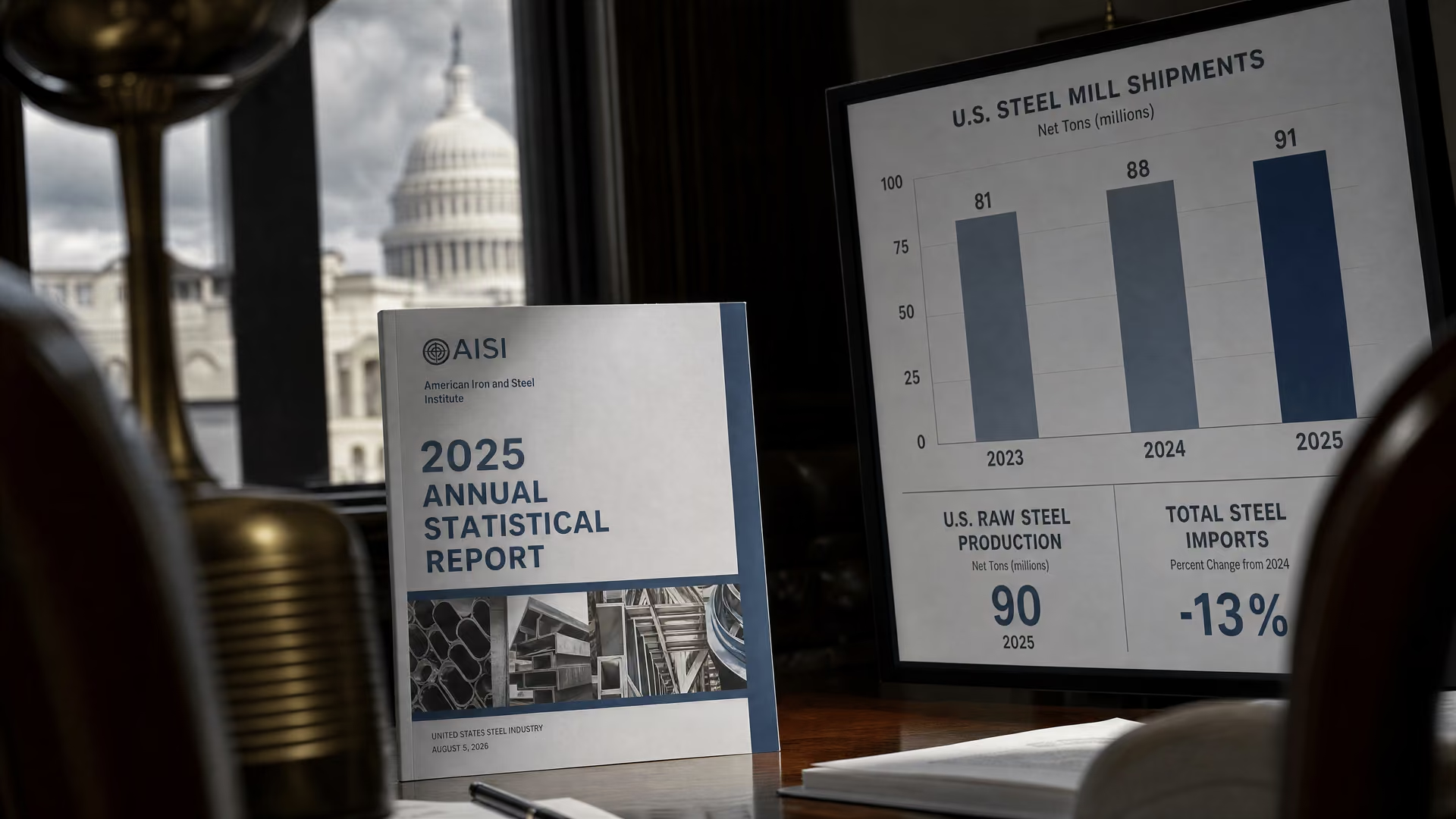
AISI’s 2025 Annual Statistical Report records 91 million net tons of US mill shipments, higher raw steel output and lower imports.

The American Iron and Steel Institute (AISI) released its 2025 Annual Statistical Report on August 5, 2026, recording 91 million net tons of domestic steel-mill shipments and 90 million net tons of US raw steel production, while total steel imports fell 13 percent from 2024.
AISI’s annual report sets out the 2025 US steel picture
AISI said its 2025 Annual Statistical Report (ASR) provides comprehensive data on the American steel industry, together with selected information on the North American steel industry as a whole. The institute’s release of the 2025 Annual Statistical Report identifies higher domestic shipments and raw steel production as the central developments in the US data for the year.
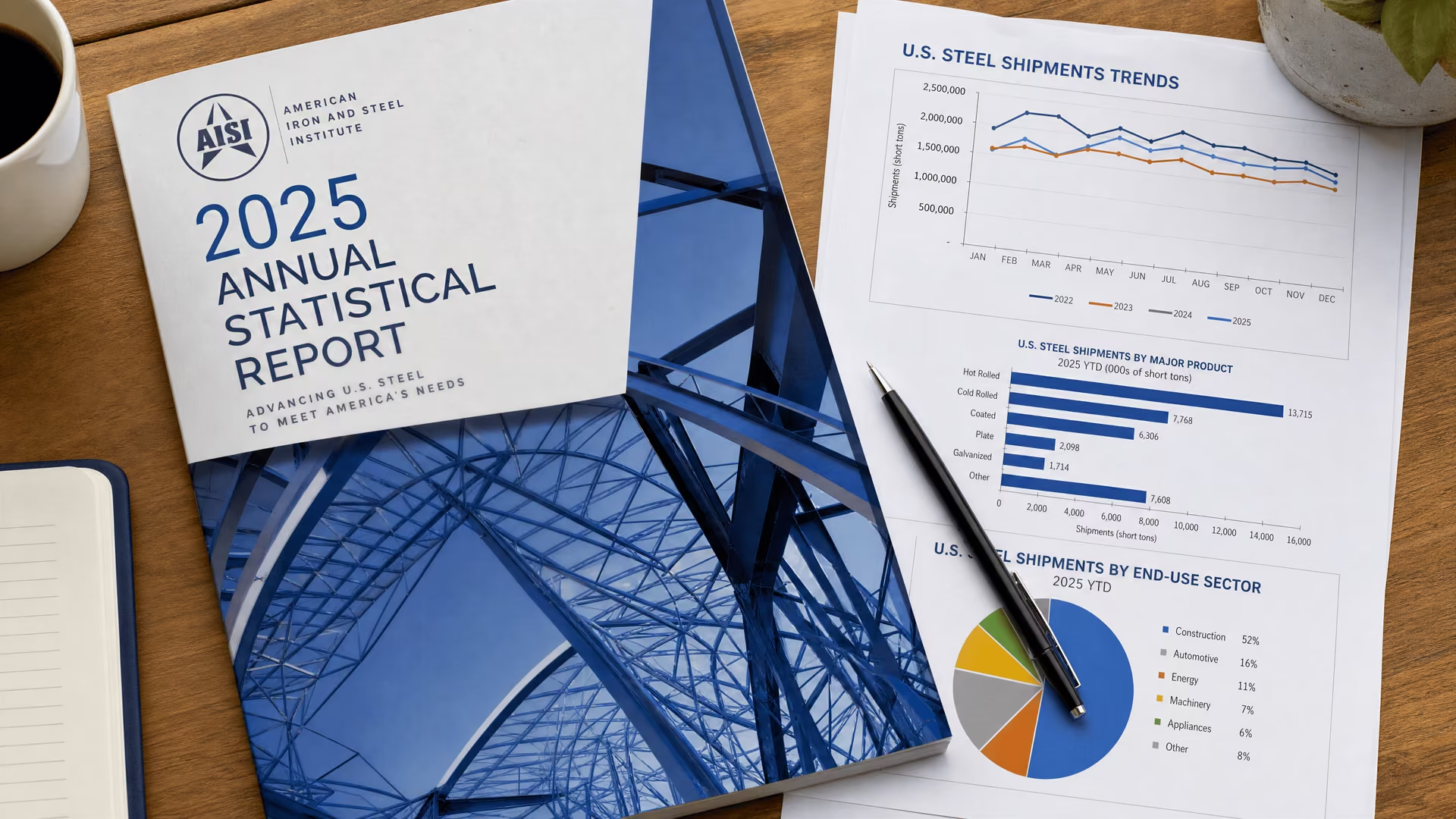
The report also records a marked reduction in steel imports. Total imports into the United States decreased by 13 percent compared with 2024, while finished steel imports declined by 17 percent and accounted for an 18 percent share of apparent steel consumption. Construction and automotive remained the leading end-use markets for shipments of US steel products.
The principal figures in AISI’s release are:
A statistical reference for the domestic market
Shipments and raw steel production both increased
Domestic steel mills shipped 91 million net tons in 2025, an increase of five percent from the previous year. US raw steel production reached 90 million net tons, three percent above the 2024 level. The two measures therefore moved in the same direction, although the report shows that shipments increased at a faster rate than production.
Those figures should be read as separate indicators rather than interchangeable measures. Shipments describe material delivered by domestic mills, while raw steel production records output at the steelmaking stage. AISI presents both in the ASR to give users a view of activity across different points in the domestic steel chain.
The 2025 comparison reported by AISI breaks down as follows:
| Indicator | 2025 figure or change | Comparison with 2024 | Source |
|---|---|---|---|
| Domestic steel-mill shipments | 91 million net tons | Up 5% | AISI Releases Annual Statistical Report for 2025 |
| US raw steel production | 90 million net tons | Up 3% | AISI Releases Annual Statistical Report for 2025 |
| Total US steel imports | Not stated in release | Down 13% | AISI Releases Annual Statistical Report for 2025 |
| Finished steel imports | 18% of apparent steel consumption | Down 17% | AISI Releases Annual Statistical Report for 2025 |
The two volume measures can also be viewed side by side, with the qualification that they describe different stages of the market:
Selected US steel volumes in 2025 (million net tons)
AISI’s release does not provide the absolute 2024 tonnage for either measure in the supplied summary, so the year-on-year percentages are the appropriate basis for comparison. The full ASR contains longer historical series that allow users to place the 2025 results against a broader ten-year record.
Imports declined, while finished steel retained an 18 percent share
The trade data in the release show a lower import presence in the US steel market during 2025. Total steel imports fell 13 percent from the previous year. Finished steel imports decreased by 17 percent and represented 18 percent of apparent steel consumption.
The figures distinguish between total imports and finished steel imports, a distinction that matters when comparing trade flows with domestic mill shipments. AISI’s summary gives the percentage movements and the finished-import share, while the full report provides detailed imports and exports data.
The import-related findings in the release can be summarised in three points:
- Total steel imports into the United States were 13 percent lower in 2025 than in 2024.
- Finished steel imports declined by 17 percent over the same period.
- Finished imports accounted for an 18 percent share of apparent steel consumption in 2025.
AISI also publishes more frequent import indicators through the Steel Import Monitoring and Analysis system. In a separate July 2026 update, the institute reported 2,294,000 net tons of steel import permit applications and estimated a finished-import market share of 18 percent. That monthly data point is not a replacement for the ASR’s annual 2025 figures, but it illustrates the difference between current monitoring and the report’s longer statistical record; the July SIMA imports update is a separate release.
Import data in the report’s wider market setting

The ASR extends well beyond three headline numbers
AISI describes the ASR as the most comprehensive reference of its kind for the American steel industry. Its coverage is not limited to the 2025 changes in shipments, production and imports. The report includes selected statistical highlights over a ten-year period, allowing users to examine changes in the domestic market rather than relying on a single annual snapshot.
The release identifies several distinct data groups within the report:
| Coverage area | Data included | Geographic or time scope | Source |
|---|---|---|---|
| Shipments and apparent supply | Selected statistical highlights | Ten-year period; United States | AISI Releases Annual Statistical Report for 2025 |
| Imports and exports | Detailed trade data | United States | AISI Releases Annual Statistical Report for 2025 |
| Raw steel production | Production and capability utilization | US data, including selected state-level production | AISI Releases Annual Statistical Report for 2025 |
| Shipments by products and markets | Product and end-use breakdowns | Ten-year period | AISI Releases Annual Statistical Report for 2025 |
| North American and global statistics | Selected statistical data | Canada, Mexico and the world | AISI Releases Annual Statistical Report for 2025 |
The report also contains selected financial highlights, employment data and charts and graphs covering the American steel industry. The combination of state-level production, capability utilization, market shipments and trade data gives the ASR a broader scope than a production release alone.
AISI says the report includes selected data on Canada, Mexico and the world, but the primary emphasis remains the United States. That distinction is important when the figures are used alongside international datasets. For example, the worldsteel June 2026 crude steel production release reports 155.7 million tonnes for 70 reporting countries, up 1.7 percent from June 2025. That later global monthly result provides context, not a direct comparison with the ASR’s full-year US measures.
Construction and automotive remain the leading end-use markets
The 2025 report identifies construction and automotive as the leading end-use markets for shipments of US steel products. AISI’s inclusion of shipments by products and markets over a ten-year period means the report can be used to examine those outlets alongside the wider market record rather than treating them as isolated annual observations.
The end-use finding also places the shipment total in practical industrial context. Steel demand connected with construction and automotive is reported alongside the production, import, employment and capability-utilization data included in the ASR. The supplied release does not provide separate tonnage or percentage shares for either sector, so the ranking should not be read as a quantified split of the 91 million net tons shipped by domestic mills.
For procurement and market analysis, the distinction between a named leading market and a quantified market share is material. The annual release establishes the direction and hierarchy of the 2025 end-use picture; the underlying ASR is the more detailed reference for product and market-level examination.
AISI positions the ASR as a reference for a changing market
AISI President and CEO Kevin Dempsey said the report was intended to provide a data-driven view of the domestic industry at a time when trade policy and market conditions were changing quickly. His statement frames the ASR as a reference document for analysts and the wider steel community, rather than as a forecast or a policy decision.
The institute’s stated role also explains the breadth of the statistical material. AISI represents integrated and electric arc furnace steelmakers, steel pipe and tube manufacturers, steel processors and fabricators, as well as associate members that supply or purchase from the industry. Its membership reflects carbon and stainless steel production and distribution.
Dempsey described the report’s role in direct terms:
The 2025 Annual Statistical Report underscores just how vital it is for our industry to have a clear, data-driven picture of where we stand.
Kevin Dempsey, AISI President and CEO
AISI says a copy of the 2025 ASR can be purchased through the S&P Global Steel Data and Analysis website or by calling 1-800-PLATTS-8. The release presents the report as a consolidated reference covering production, shipments, markets, employment, financial indicators and trade.
For readers comparing annual steel statistics, the main value of the document is the combination of consistent US coverage and historical depth. Its 2025 results show higher domestic shipments and production alongside lower imports, while its broader tables are designed to place those movements within a ten-year series and a selected North American and global context.
AISI’s 2025 Annual Statistical Report records a US steel market in which domestic shipments and raw steel production increased while imports declined. Its wider ten-year coverage makes the report a reference point for reading those movements across products, end-use markets, production locations and trade flows.