


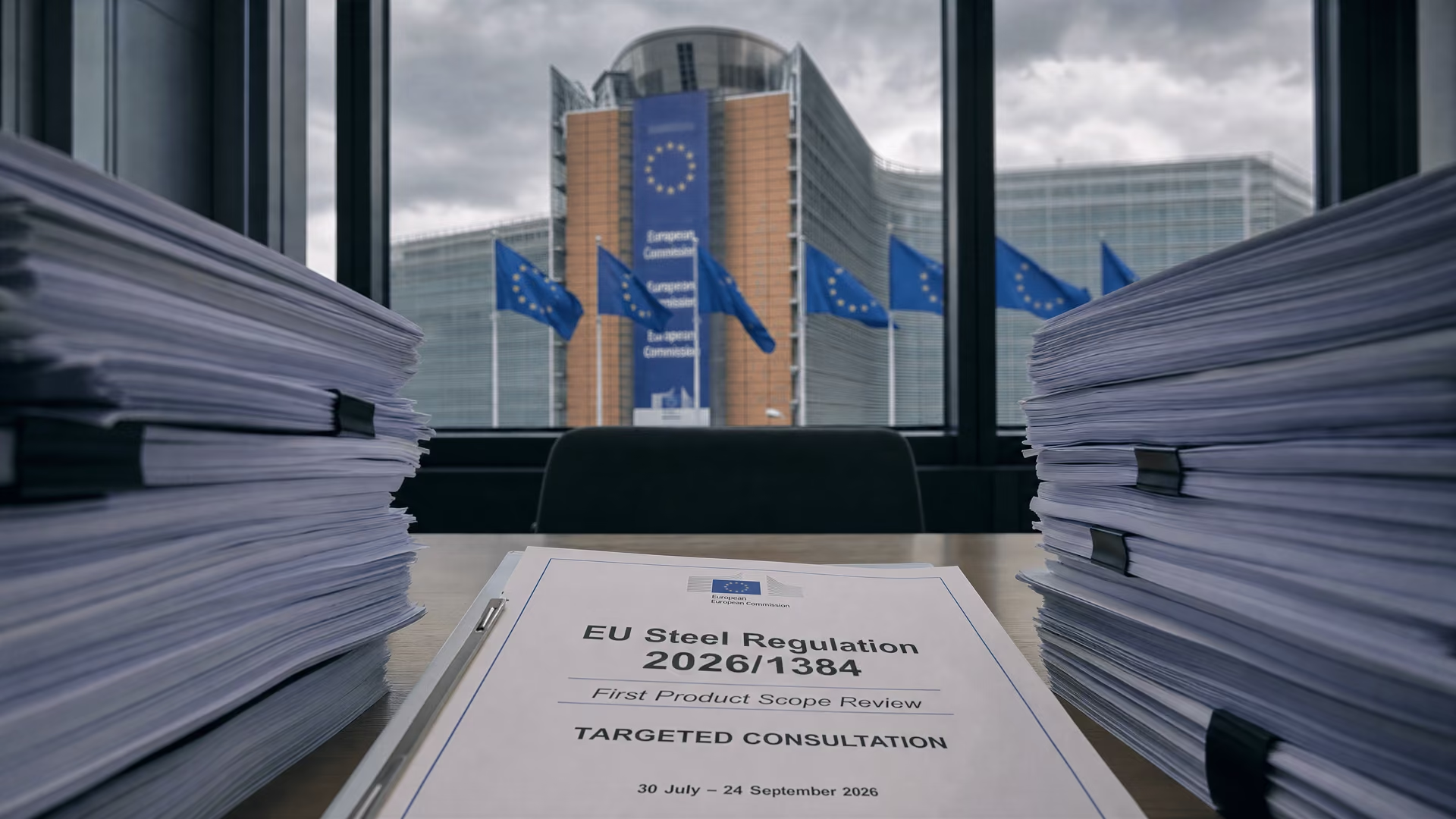
The European Commission has launched an eight-week consultation on whether EU Steel Regulation 2026/1384 should cover cast-iron tubes, wire and forged bars

The European Commission opened an eight-week targeted consultation on 30 July 2026 to determine whether four additional product categories should be brought within the scope of EU Steel Regulation 2026/1384, with the first review due for completion by 31 December. The Commission’s consultation announcement asks producers, users, traders, importers, industry associations and other stakeholders to provide evidence on the product groups that may need to be addressed by EU measures.
Commission opens the first scope review
The consultation is the first product scope review required under the European Union’s new steel regulation. Regulation (EU) 2026/1384 entered into force on 1 July and addresses what the European Commission describes as the negative trade-related effects of global overcapacity on the EU steel market.
Under Article 12.1, the Commission must assess whether the regulation’s product scope needs to be amended. The review does not itself add products to the regime. Instead, it opens a formal evidence-gathering process before the Commission analyses the responses and determines whether amendments are necessary. The main parameters are:
The consultation therefore sits between the regulation’s entry into force and a possible future amendment. The Commission has identified the categories to be examined, but the announcement does not state that any of them will ultimately be included.
Four product categories enter the assessment
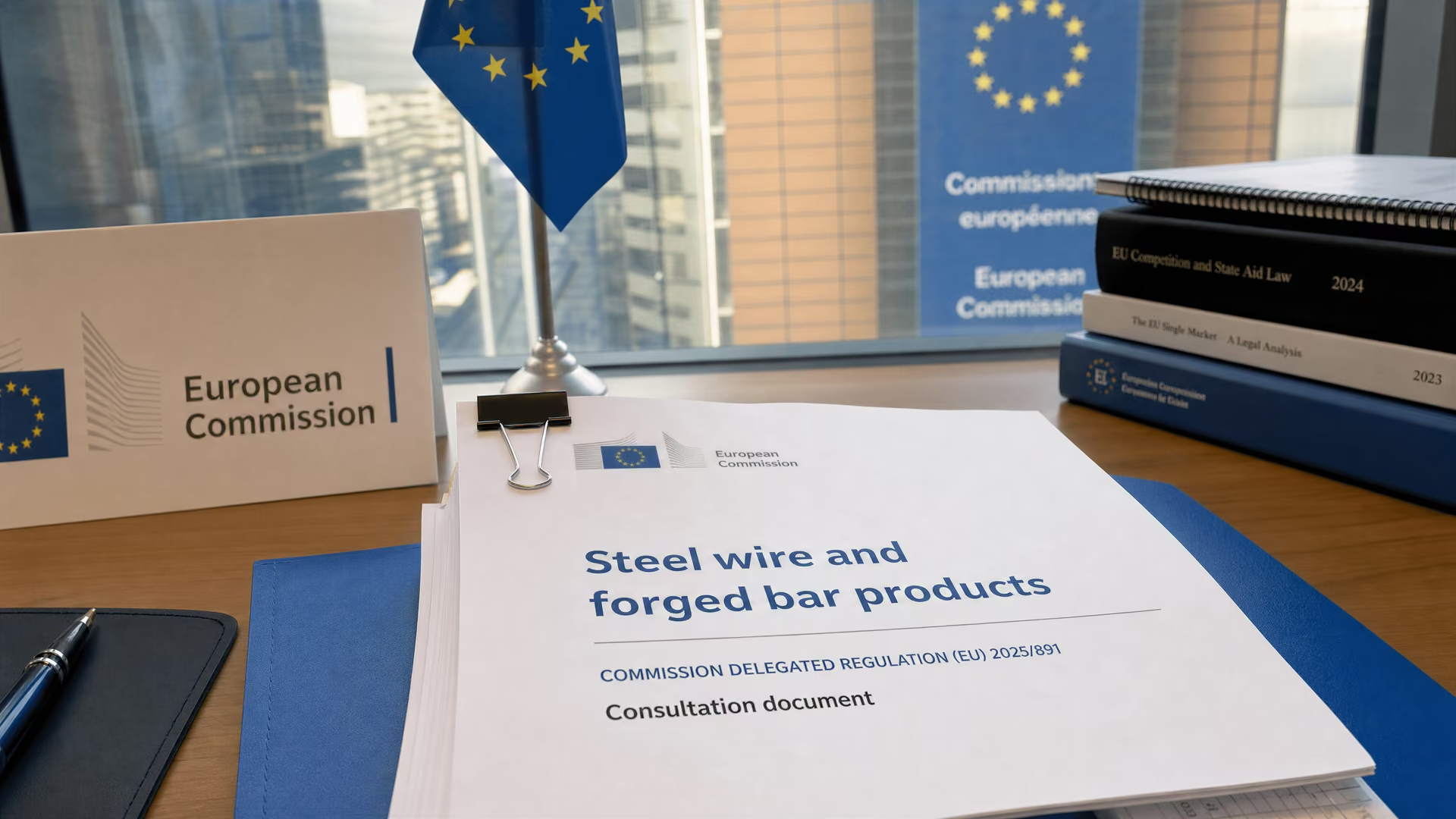
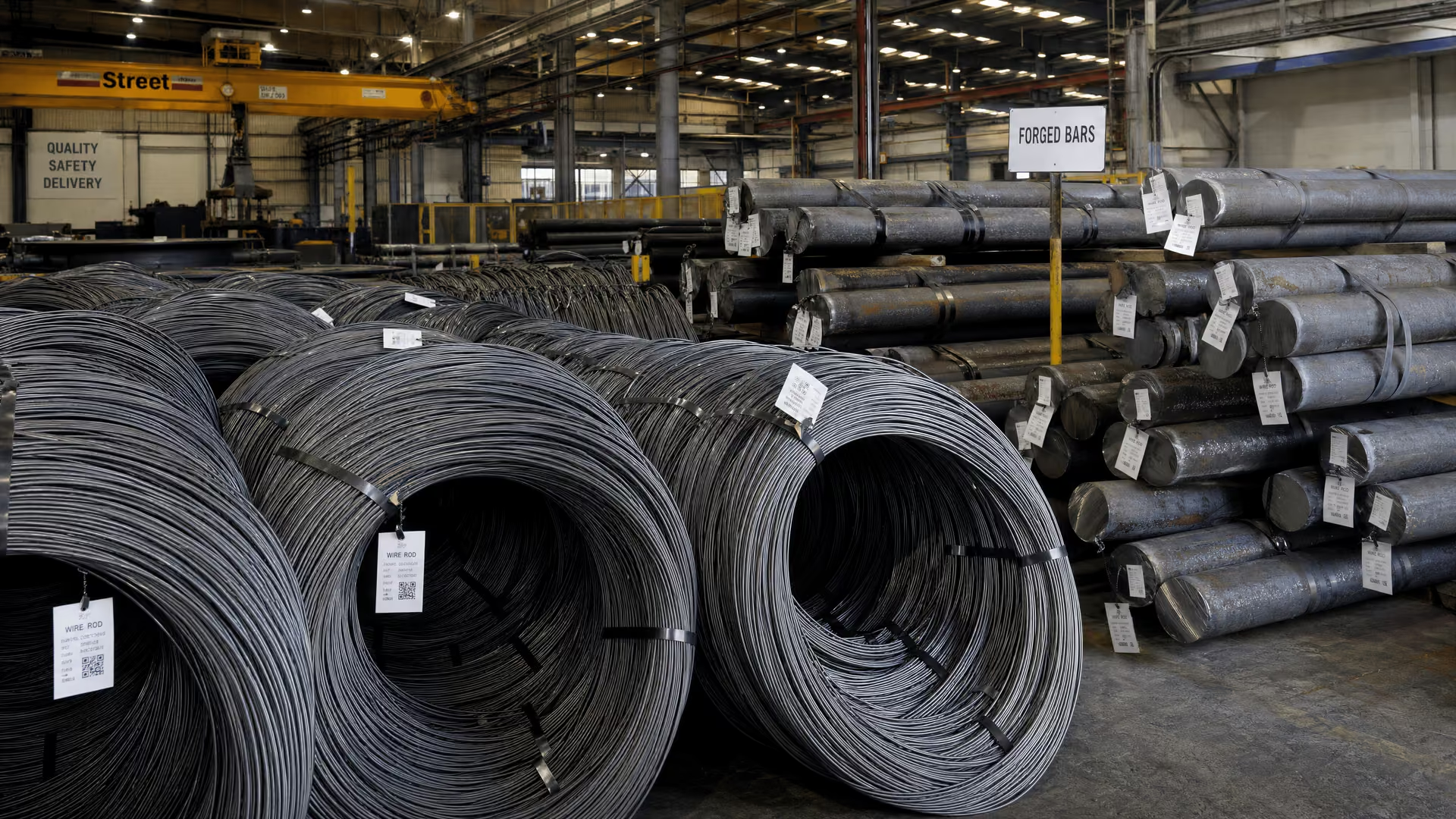
Article 12.1 identifies four categories for the scope assessment. They cover cast-iron tubular products, two wire groupings and forged bars. The wording supplied by the Commission is significant for technical and commercial readers because the consultation concerns product groups rather than a single broad steel designation.
Products named by Article 12.1
| Product category | Commission wording | Question under review | Source |
|---|---|---|---|
| Cast-iron tubular products | Tubes, pipes and hollow profiles, of cast iron | Whether the category should be included in the regulation’s scope | European Commission consultation |
| Non-alloy and other alloy wire | Non-alloy and other alloy wire | Whether products in this category require coverage by EU measures | European Commission consultation |
| Stainless wire | Stainless wire | Whether stainless wire should be added to the product scope | European Commission consultation |
| Non-alloy and other alloy forged bars | Non-alloy and other alloy forged bars | Whether forged bars should be addressed by the regulation | European Commission consultation |
The categories should be read as the boundaries of the Commission’s inquiry, not as a final legal product list. The consultation is intended to identify which product groups need to be addressed by EU measures after the Commission has considered stakeholder information and views.
Why the product wording matters
For steel producers and downstream users, the review creates a distinction between products already covered by the regulation and products that may be considered for inclusion. The announcement provides no tariff-line detail, grade list or final inclusion decision. It does, however, establish the four product categories that will frame the initial discussion.
The review will begin with those defined categories rather than an open-ended examination of the entire steel product universe:
Stakeholders are being asked for evidence
The Commission is seeking information from across the EU steel supply chain and from companies involved in international trade. Its list includes steel producers, steel users, traders, importers, industry associations and other stakeholders. That breadth reflects the regulation’s trade-policy function: product scope can affect both the conditions under which material enters the EU market and the availability of steel for downstream users.
Who the consultation addresses
The stakeholder groups named in the Commission notice are:
- Steel producers
- Steel users
- Traders
- Importers
- Industry associations
- Other stakeholders with relevant information or views
The notice does not prescribe a preferred commercial position. It asks for information and views that can help identify the product groups requiring attention under EU measures. In practical terms, the consultation gives both supply-side and demand-side participants an opportunity to place evidence on the record before the scope assessment is completed.
The Commission’s stated purpose is to test whether the product scope is sufficient in light of the trade conditions the regulation is intended to address:
The public consultation seeks to gather information and views on the product groups that need to be addressed by EU measures.
European Commission
For participants, the central issue is not simply whether a product is made or traded in the EU. The Commission is asking which groups should be addressed by the regulation, making product definition and the evidence supporting inclusion central to the review.
The review sits inside a new quota-and-duty framework
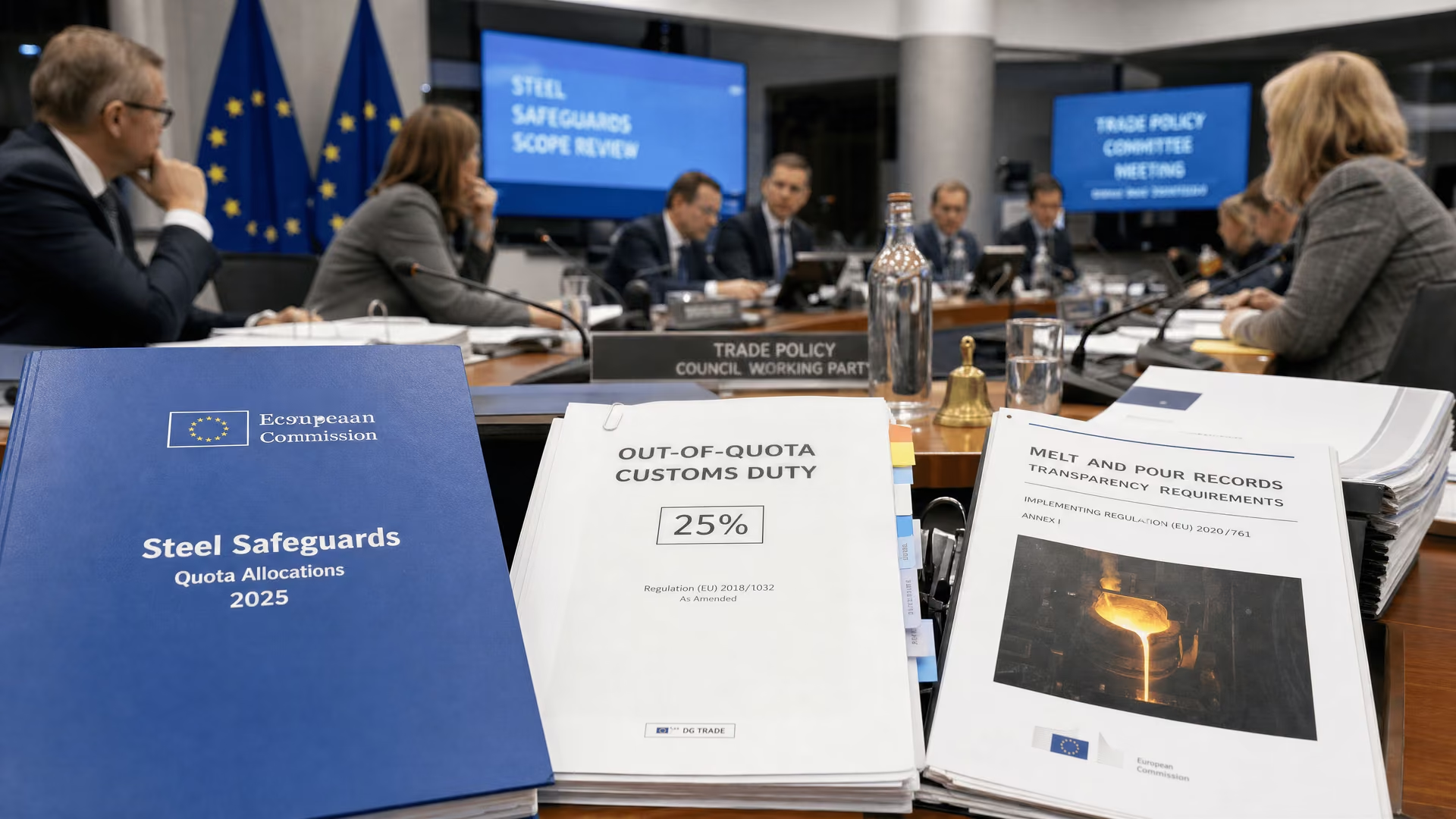
The product scope review is taking place after the broader EU Steel Regulation entered into force on 1 July 2026. The regulation sets free-of-duty quotas at 18.3 million tons, applies a 50% duty to imports outside quota and introduces a melt-and-pour regime intended to enhance transparency.
The Commission says tariff-quota distribution is based on clearly defined criteria in the regulation. It presents that methodology as a way to provide third-country suppliers with a predictable level of access to the EU market while maintaining diversity of supply for EU downstream users. The framework can be summarised as follows:
- Free-of-duty quotas are set at 18.3 million tons.
- Imports outside the available quota are subject to a 50% duty.
- Melt-and-pour information is used as part of a regime intended to improve transparency.
- Tariff quotas are distributed according to criteria defined in the regulation.
These mechanisms form the background against which possible product-scope changes would be considered. The 30 July announcement does not announce a new quota allocation, a new duty rate or an immediate change to the treatment of the four categories. It launches the assessment required by Article 12.1.
The Commission’s policy rationale
In its background explanation, the Commission links the regulation to what it calls an unsustainable level of global overcapacity and a growing number of trade-restrictive measures in third countries. It says those conditions have contributed to trade diversion into the EU market. The Commission also frames the regulation as a measure intended to protect the EU steel industry and support its long-term viability and sustainability.
The scope review tests the reach of that framework. The question is whether the four identified product categories should be included so that the regulation’s measures address the relevant product groups. The Commission’s own assessment, including the consultation responses, will determine the next step:
Product coverage is the central commercial question
For procurement engineers, importers and steel users, the immediate commercial significance lies in the possibility of a future change in product coverage. The Commission is not asking stakeholders to respond to a completed amendment. It is collecting the information needed to decide whether the scope should be amended and which product groups require treatment under EU measures.
That makes the consultation relevant to participants whose activity is concentrated in cast-iron tubes, pipes and hollow profiles, wire, stainless wire or forged bars. It also gives producers and downstream users different reasons to engage: producers may address the competitive conditions affecting the identified products, while users, traders and importers may provide information on supply, sourcing and market access. The source announcement does not specify the evidence each group should submit, so no more detailed filing criteria can be inferred from it.
What market participants can monitor
The consultation creates four practical checkpoints for companies tracking the file:
- The four product categories named in Article 12.1.
- The consultation period, which runs from 28 July to 28 September 2026.
- The Commission’s analysis of stakeholder responses after the consultation closes.
- The Commission’s stated deadline to finalise the product scope assessment by 31 December 2026.
Until that assessment is completed, the scope question remains open. The Commission’s announcement provides a timetable and a defined set of categories, but not the outcome of the review. Any commercial interpretation should therefore distinguish the regulation already in force from products that are only under consideration for possible inclusion.
The consultation timetable runs to year-end
The regulation, consultation and assessment are connected by a sequence of dated milestones:
Questions the announcement answers
The Commission’s notice establishes the following points:
EU Steel Regulation scope review: key questions
What is being reviewed?
The Commission is assessing whether the product scope of EU Steel Regulation 2026/1384 should be amended to include cast-iron tubes, pipes and hollow profiles, non-alloy and other alloy wire, stainless wire, and non-alloy and other alloy forged bars.
Who can provide feedback?
The consultation is directed to steel producers, steel users, traders, importers, industry associations and other stakeholders.
How long does the consultation run?
The Commission states that the consultation runs for eight weeks, from 28 July to 28 September 2026.
When should the assessment be completed?
The Commission should finalise the product scope assessment by 31 December 2026.
What measures are already part of the regulation?
The regulation sets free-of-duty quotas at 18.3 million tons, applies a 50% duty to out-of-quota imports and includes a melt-and-pour regime intended to enhance transparency.
The European Commission’s first scope review is therefore a defined procedural stage rather than a completed expansion of the steel regulation. Its outcome will depend on the information gathered during the consultation and the Commission’s subsequent assessment of the four named product categories.
The EU’s first product scope review places four clearly identified steel product categories under formal examination while leaving their eventual inclusion undecided. For companies trading, producing or using those products, the immediate milestones are the 28 September consultation close and the Commission’s 31 December 2026 assessment deadline.
Sources
- June 2026 crude steel production (worldsteel.org)
- Access Temporarily Restricted (worldsteel.org)
- Stellungnahme zum Referentenentwurf Gesetz zur Änderung des Kreislaufwirtschaftsgesetzes (KrWG) (wvstahl.de)
- Geschäftsführung und Team (wvstahl.de)
- Agency Information Collection Activities; Submission to the Office of Management and Budget (OMB) for Review and Approval; Comment Request; Steel Import License (federalregister.gov)
- Rescission of Antidumping and Countervailing Duty Administrative Reviews (federalregister.gov)
- AISI Releases July SIMA Imports Data (steel.org)
- AISI Releases Annual Statistical Report for 2025 (steel.org)
- Mercato (federacciai.it)
- Mercato nazionale (federacciai.it)